
Emerging Area: Movement Ecology
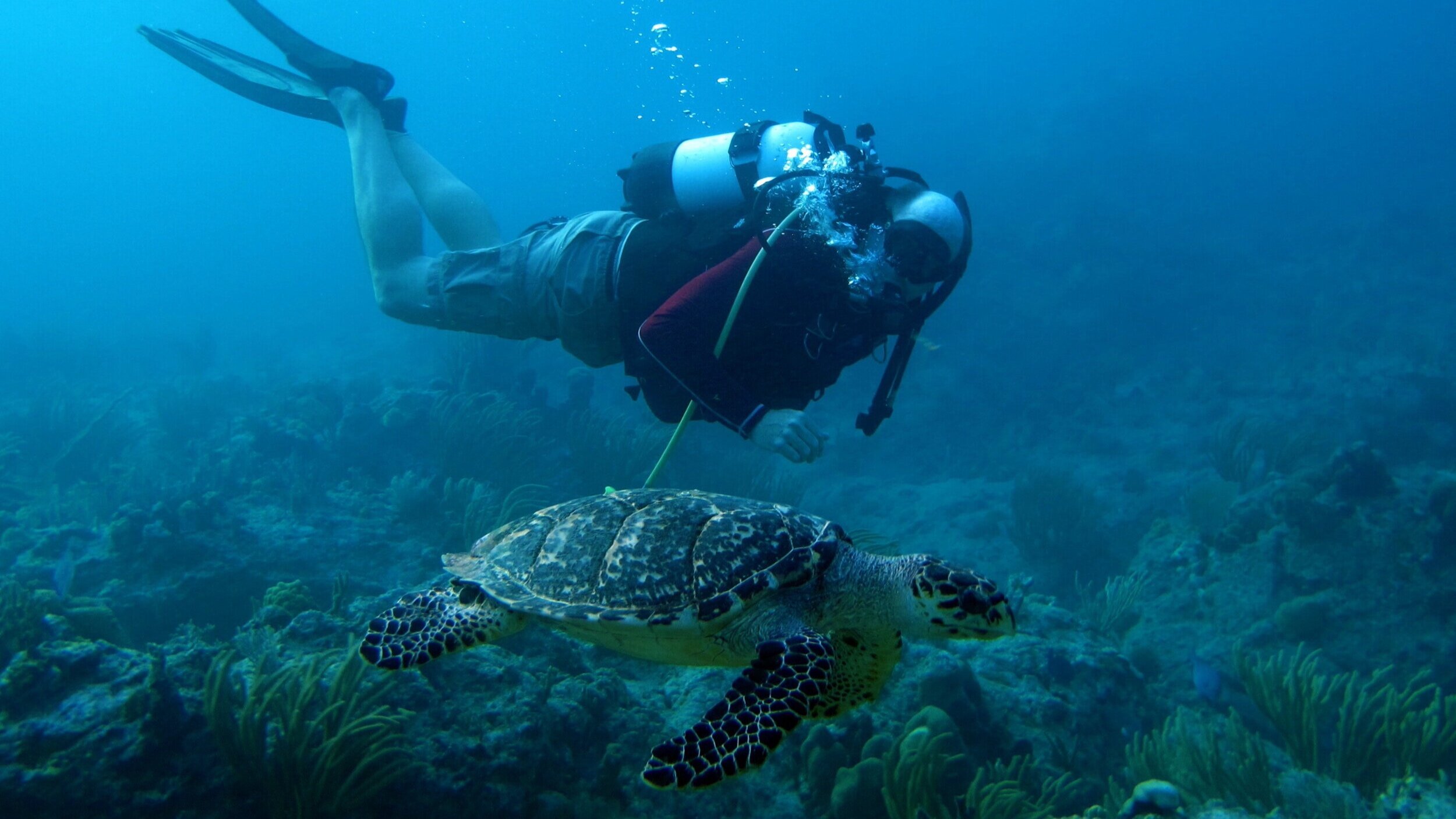
The movement ecology sub-project pioneered high-tech tracking of sea creatures in Brewers Bay, St. Thomas, to learn how animals use our nearshore habitats. Researchers installed a fine-scale acoustic positioning system – essentially an underwater GPS – that allowed them to follow the minute-by-minute movements of tagged marine animals. By tagging green and hawksbill sea turtles, as well as large crustaceans like giant hermit crabs, the team studied where these animals traveled, fed, and rested, and how their behavior might be influenced by environmental factors. This was one of the first studies in the USVI to track marine animals with such precision over long periods. The effort supports conservation by identifying critical habitats (for example, do turtles stick around seagrass beds? How far do they roam?), and it also dovetailed with other R2R themes by linking animal behavior to habitat conditions.
Mangrove in the USVI. Photo by Dan Mele.
Key Accomplishments
In Year 2, the team successfully deployed an array of over a dozen acoustic receivers across Brewers Bay and began tagging animals once permits were in place. By the project’s end, they had tagged and tracked over 50 green turtles and 15 hawksbill turtles, plus several large hermit crabs, accumulating an unprecedented dataset on these species’ local movements. The data revealed fascinating patterns: the tracked turtles showed high site fidelity, spending most of their time within Brewers Bay’s sheltered waters. In fact, some individuals established extremely small “home ranges” at night, returning to the same resting spots on the bay floor each evening. During the day, the turtles’ tracks indicated strong preferences for certain areas of native seagrass, presumably where their favorite foods were abundant. The hermit crabs (which were surprisingly good swimmers!) also largely stayed within the bay’s boundaries. These findings suggest Brewers Bay is an important habitat that provides everything these animals need – a result that underscores the bay’s ecological value.
The movement team didn’t stop at raw tracking data. They created detailed benthic habitat maps of Brewers Bay, so they could overlay animal positions on habitat type. By doing this, they performed a resource selection analysis, confirming that turtles strongly preferred native seagrass beds over areas dominated by the invasive seagrass. This has management implications: if invasive grass spreads, turtles might have less optimal feeding grounds. The team also noted only minor changes in seagrass cover in key turtle foraging spots over six months, indicating those habitats remained fairly stable in the short term. On the public outreach side, the researchers shared their methods and results in engaging ways. In April 2023, they presented at the International Sea Turtle Symposium in Cartagena, Colombia, showcasing how this V.I. project is contributing to global turtle conservation knowledge.

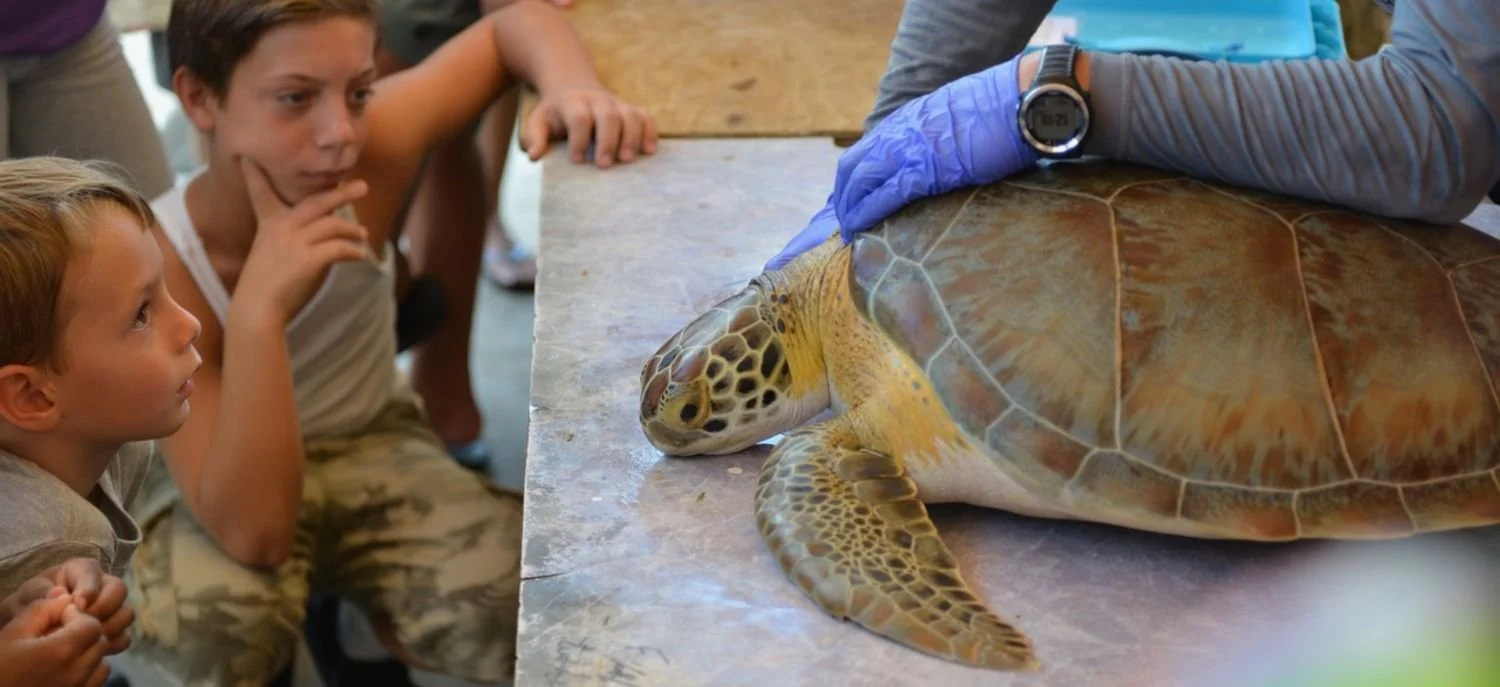
Impacts: Thanks to this project, we now know that at least some endangered sea turtles in the USVI are year-round residents, not just passing through. Brewers Bay emerged as a “home base” for dozens of juvenile and subadult turtles. This information was communicated to local resource managers at DPNR and the National Park Service, emphasizing the need to protect Brewers Bay’s water quality and seagrass meadows. Moreover, the acoustic array will continue to operate beyond the project, providing a long-term observatory for marine life movement. It also supported four UVI Master’s theses – for example, one student, T. Brunson, successfully defended her thesis in May 2023 using data from the array. By involving students in cutting-edge telemetry research and by sharing findings through community talks (including “meet the scientist” events where the public could learn about turtle tagging), the Movement Ecology project met its goals of science, education, and partnership. It also demonstrated the power of new technology to answer age-old questions about marine animal behavior in the Virgin Islands.
Dr. Paul Jobsis
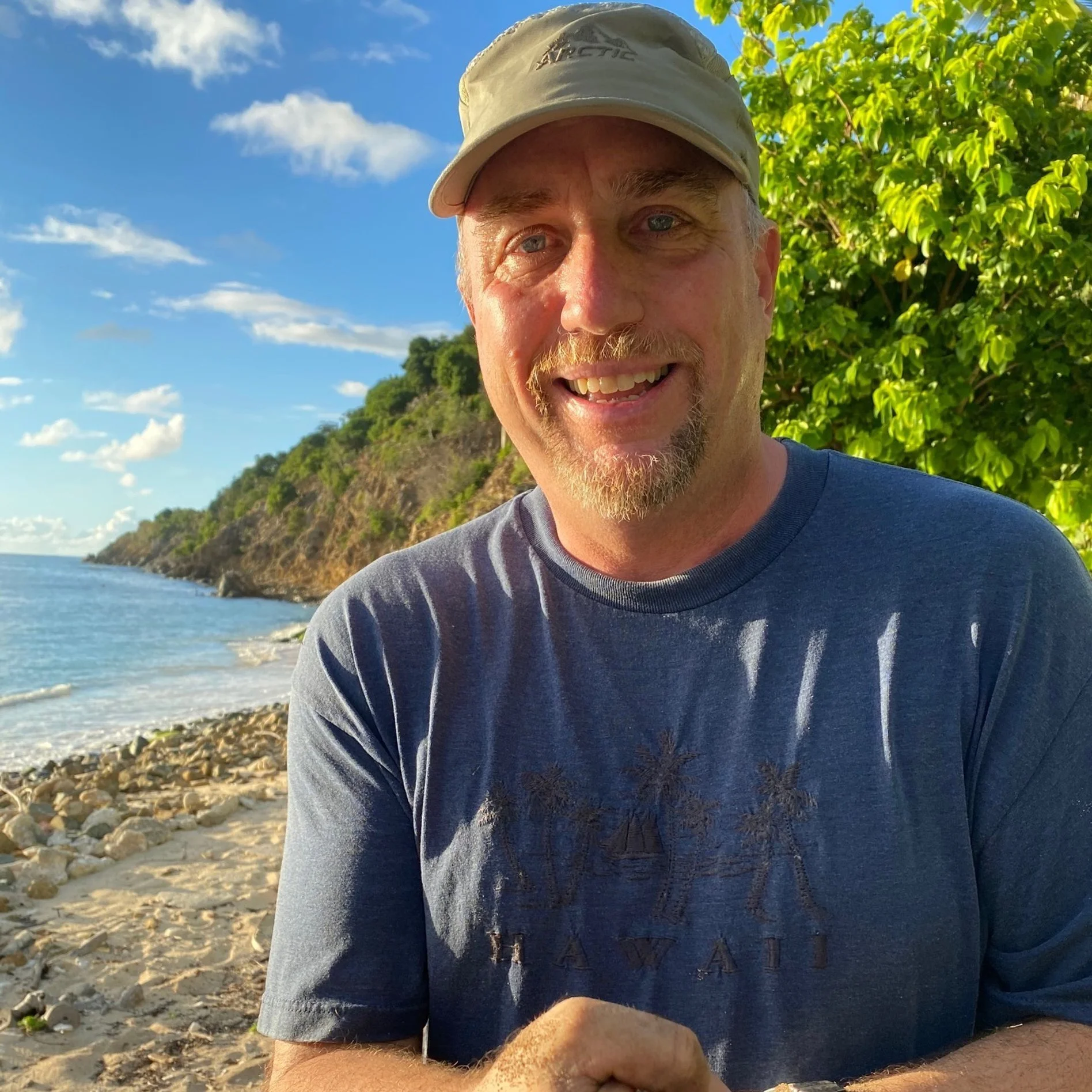
As the Center for Marine and Environmental Studies Director I hope to continue our growth and support additional researcher and student opportunities.
VI-EPSCoR has changed my career trajectory and made me a better researcher. My research training in marine mammal diving, cardiac physiology, advanced microscopy, and tissue oxygenation left me well-trained. Still, I needed to be more focused on research that could be done in the USVI. The opportunities provided by VI-EPSCoR have allowed me to focus on movement ecology and seagrass biology. This has allowed me to collaborate with excellent scientists, attract deserving students, train them, and publish in peer-reviewed journals and participate in international conferences.
In the future, I want to direct my research into ecology and conservation by focusing on the changes in sex ratios and basal metabolism in sea turtles affected by climate change. This stems from VI-EPSCoR-supported research showing increased movement and decreased dive duration in critically endangered sea turtles during warm water periods. VI-EPSCoR has also exposed me to a wide range of research, allowing me to pursue interests in Oceanography and Marine Ecology. Using what I have learned as a VI-EPSCoR researcher, I hope to encourage other VI researchers and improve the climate for scientific research in the Territory.
Additional reading and links:
Lorem ipsum dolor sit amet consectetur adipiscing elit. Quisque faucibus ex sapien vitae pellentesque sem placerat. In id cursus mi pretium tellus duis convallis. Tempus leo eu aenean sed diam urna tempor. Pulvinar vivamus fringilla lacus nec metus bibendum egestas. Iaculis massa nisl malesuada lacinia integer nunc posuere. Ut hendrerit semper vel class aptent taciti sociosqu. Ad litora torquent per conubia nostra inceptos himenaeos.
Lorem ipsum dolor sit amet consectetur adipiscing elit. Quisque faucibus ex sapien vitae pellentesque sem placerat. In id cursus mi pretium tellus duis convallis. Tempus leo eu aenean sed diam urna tempor. Pulvinar vivamus fringilla lacus nec metus bibendum egestas. Iaculis massa nisl malesuada lacinia integer nunc posuere. Ut hendrerit semper vel class aptent taciti sociosqu. Ad litora torquent per conubia nostra inceptos himenaeos.
Lorem ipsum dolor sit amet consectetur adipiscing elit. Quisque faucibus ex sapien vitae pellentesque sem placerat. In id cursus mi pretium tellus duis convallis. Tempus leo eu aenean sed diam urna tempor. Pulvinar vivamus fringilla lacus nec metus bibendum egestas. Iaculis massa nisl malesuada lacinia integer nunc posuere. Ut hendrerit semper vel class aptent taciti sociosqu. Ad litora torquent per conubia nostra inceptos himenaeos.
Lorem ipsum dolor sit amet consectetur adipiscing elit. Quisque faucibus ex sapien vitae pellentesque sem placerat. In id cursus mi pretium tellus duis convallis. Tempus leo eu aenean sed diam urna tempor. Pulvinar vivamus fringilla lacus nec metus bibendum egestas. Iaculis massa nisl malesuada lacinia integer nunc posuere. Ut hendrerit semper vel class aptent taciti sociosqu. Ad litora torquent per conubia nostra inceptos himenaeos.
Lorem ipsum dolor sit amet consectetur adipiscing elit. Quisque faucibus ex sapien vitae pellentesque sem placerat. In id cursus mi pretium tellus duis convallis. Tempus leo eu aenean sed diam urna tempor. Pulvinar vivamus fringilla lacus nec metus bibendum egestas. Iaculis massa nisl malesuada lacinia integer nunc posuere. Ut hendrerit semper vel class aptent taciti sociosqu. Ad litora torquent per conubia nostra inceptos himenaeos.