Over the past 24 years, support from the U.S. National Science Foundation through VI-EPSCoR has shown how sustained investment in research can strengthen science, expand opportunities, and support resilient communities in the U.S. Virgin Islands. Building on the University of the Virgin Islands’s leadership in marine and environmental research, the program has grown into a hub for innovation - linking coral reefs, mangroves, watersheds, classrooms, and public decision-making to shape a more sustainable future for the territory.
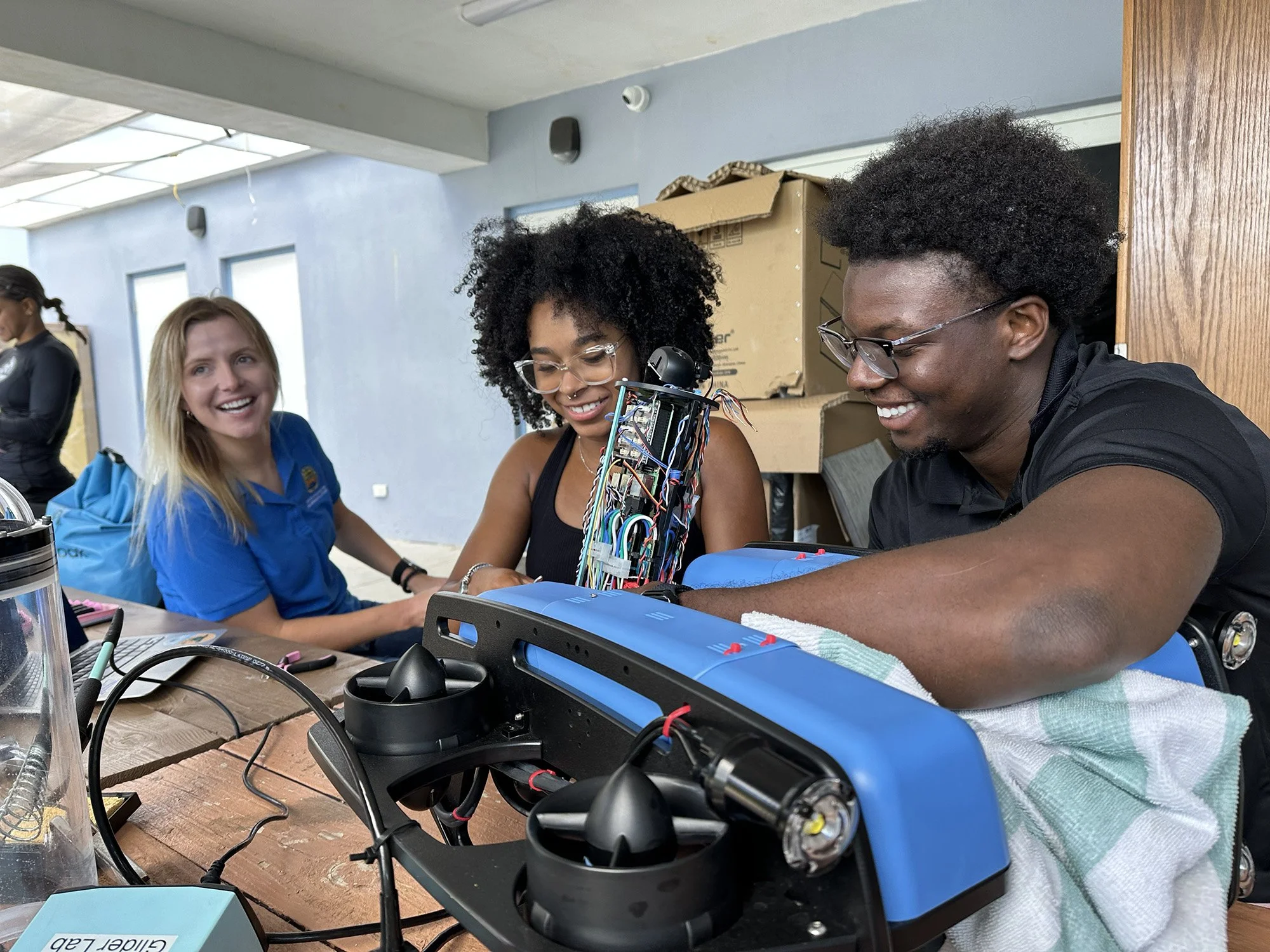
VI-EPSCoR is the NSF’s long-standing program in the U.S. Virgin Islands, designed to build scientific capacity, support competitive research, and develop a strong local STEM workforce. Over time, it has expanded research infrastructure, supported graduate education, strengthened STEM teaching and outreach, and fostered partnerships across government, schools, nonprofits, and the broader community. Its latest effort, the Virgin Islands Center for Autonomous Research (VICAR), builds on this foundation by integrating robotics, artificial intelligence, and advanced monitoring technologies to better understand and protect the islands’ coral reefs, mangroves, watersheds, and ocean systems.
VI-EPSCoR Funding Timeline
-
![]()
2002
The U.S. Virgin Islands becomes an NSF EPSCoR jurisdiction.
-
![]()
2003-2008
The Biocomplexity of Caribbean Coral Reefs (BCCR) $4.5 million project aimed to deepen understanding of the Virgin Islands’ coastal ecosystems by studying their biodiversity, ecosystem connections, and surrounding ocean conditions. The region’s reef systems offered a unique and globally important setting for this research.
-
![]()
2008-2014
The Integrated Caribbean Coastal Ecosystems (ICCE) project was awarded $12.4 million by the National Science Foundation to address key research gaps identified by the earlier BCCR project and to support interdisciplinary studies of island ecosystems and their impacts. It also strengthened the University of the Virgin Islands as a leader in tropical marine research and improved its ability to secure national funding.
-
![]()
2014-2019
The Mare Nostrum Caribbean project awarded $20 million to study U.S. Virgin Islands marine ecosystems vital to the territory’s economy but vulnerable to human and climate pressures. The project advanced interdisciplinary research on coral reef resilience, developed strategies to mitigate environmental impacts, and strengthened community partnerships, STEM education, and workforce development, while further enhancing the University of the Virgin Islands’s research capacity.
-
![]()
2020-2026
The Ridge to Reef (R2R) project is a five-year, $20 million environmental research initiative. It takes an integrated “ridge-to-reef” approach to examine how land-based activities and natural disturbances, from watersheds and ghuts to coastal zones, affect water quality and the health of downstream ecosystems, including mangroves and coral reefs across the U.S. Virgin Islands.
-
![]()
2025-2029
The Virgin Islands Center for Autonomous Research (VICAR) project was awarded $7.0 million to advance ecological monitoring and restoration through autonomous technologies while building a locally trained STEM workforce in the U.S. Virgin Islands.