

The VICARIUS Platform
Connecting autonomous vehicles, 3D mapping, artificial intelligence and reproducible data workflows to monitor changing marine ecosystems.
↓ READ MORE
What is VICARIUS?
VICARIUS, the VICAR Integrated Undersea Survey platform, is being developed to transform how marine and coastal ecosystems are monitored in the U.S. Virgin Islands. By bringing together autonomous vehicles, 3D mapping, artificial intelligence and standardized data-processing tools, VICARIUS is creating a more efficient and reproducible way to collect, analyze and use large environmental datasets.
Why it matters
Long-term ecosystem monitoring produces enormous amounts of imagery and other environmental data. Processing those data manually can be slow, labor-intensive and difficult to reproduce over time. VICARIUS is designed to connect the tools used to collect, organize, process and analyze those data into a coordinated system that researchers can reuse and improve.
Faster processing
Automate repetitive steps in environmental data analysis.
Reproducible science
Document how data move from collection through analysis.
Reusable tools
Create methods that can be used by future students, researchers and monitoring programs.
How It Works
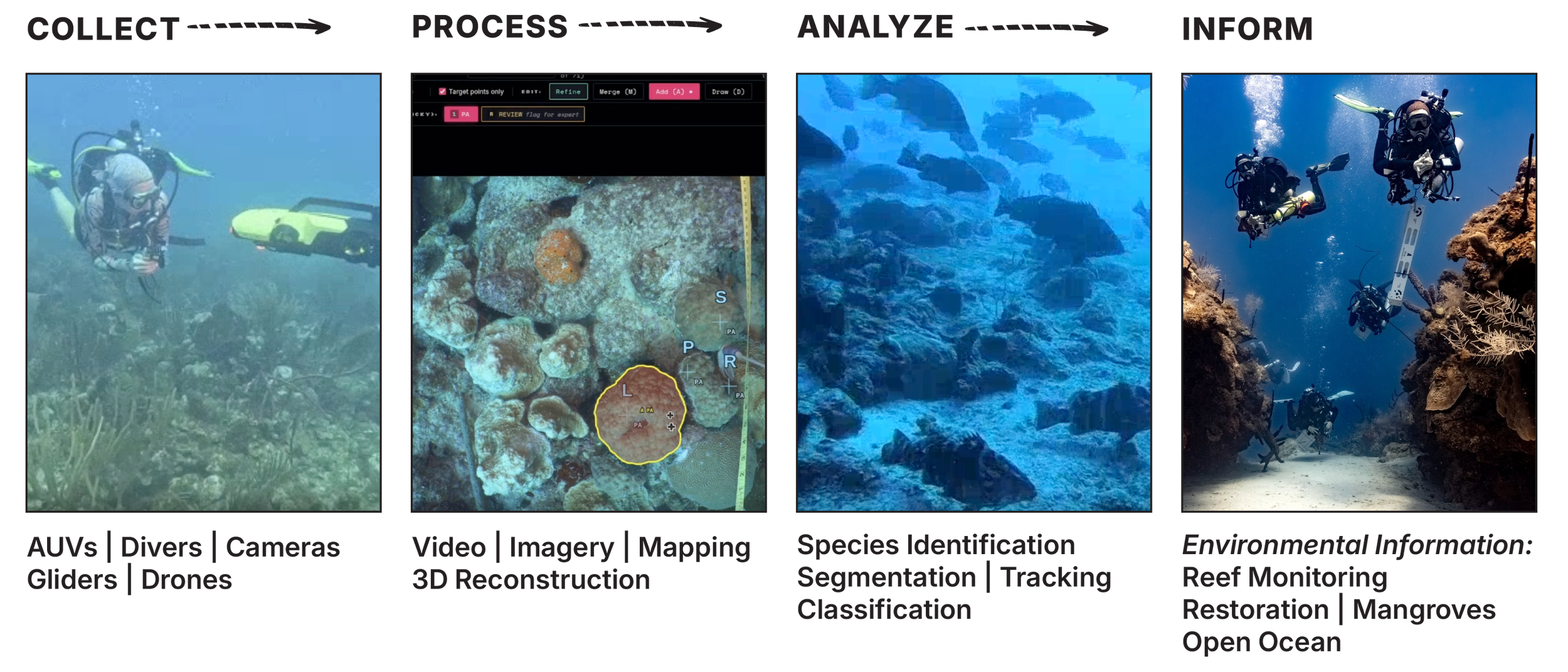
VICARIUS connects the full workflow, from field data collection through processing and AI-assisted analysis, to turn complex marine data into consistent, reusable environmental information.
The VICAR Lab
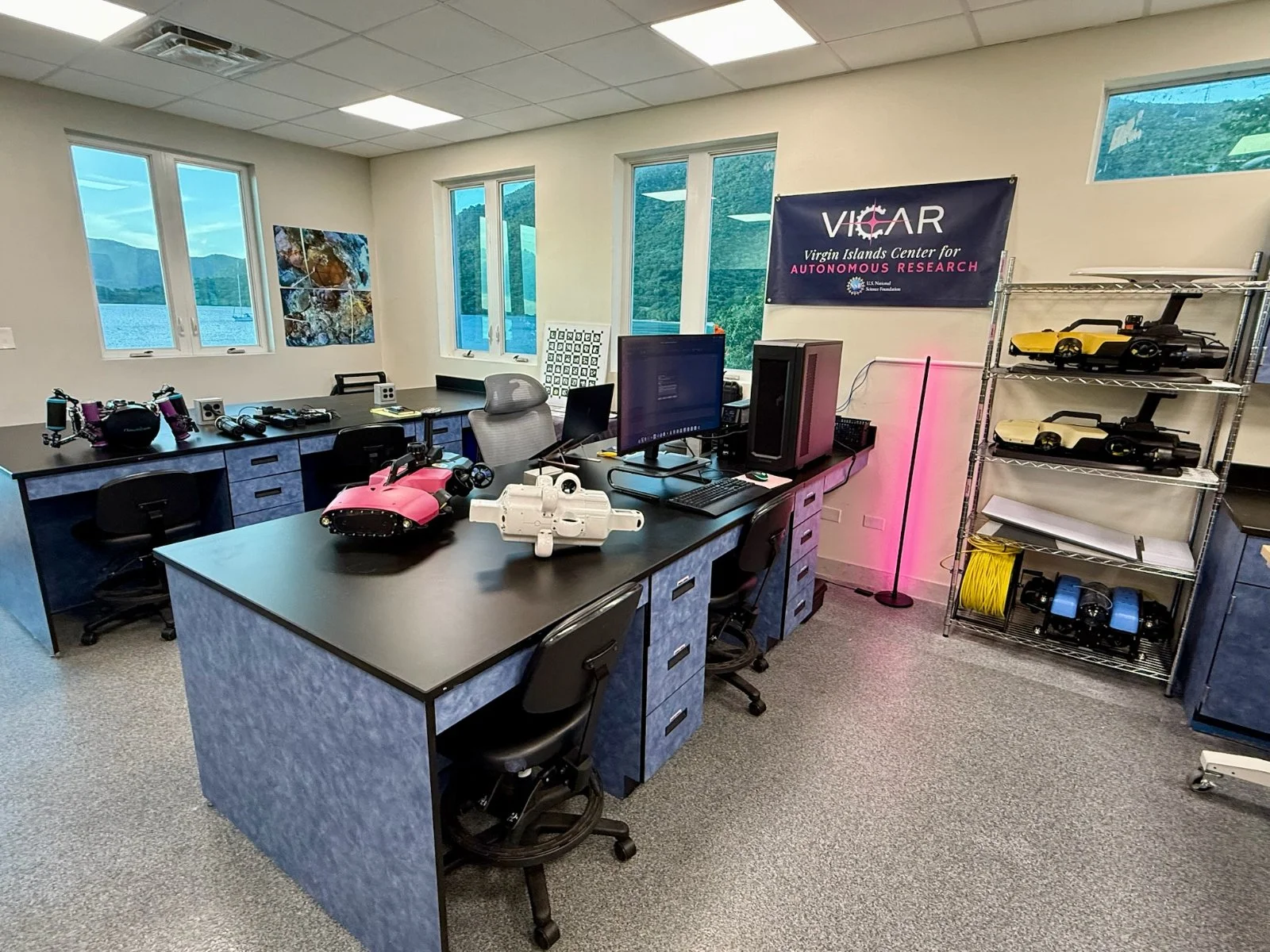
The VICARLab at UVI's Center for Marine and Environmental Studies supports much of the day-to-day development and testing of VICARIUS, bringing together researchers, students, robotics, computing infrastructure and long-term reef-monitoring data. VICARIUS is a project-wide VICAR platform designed to support research across reef, mangrove and open-ocean systems.
Explore current lab research, technical development and updates at VICARLab.org
Visit the VICARLab ↗
One Platform. Connected Ecosystems.
VICARIUS is being developed through coral reef research and designed to expand into mangrove and open-ocean monitoring.
-

Coral Reef Ecosystem Research
DEVELOPMENT UNDERWAY
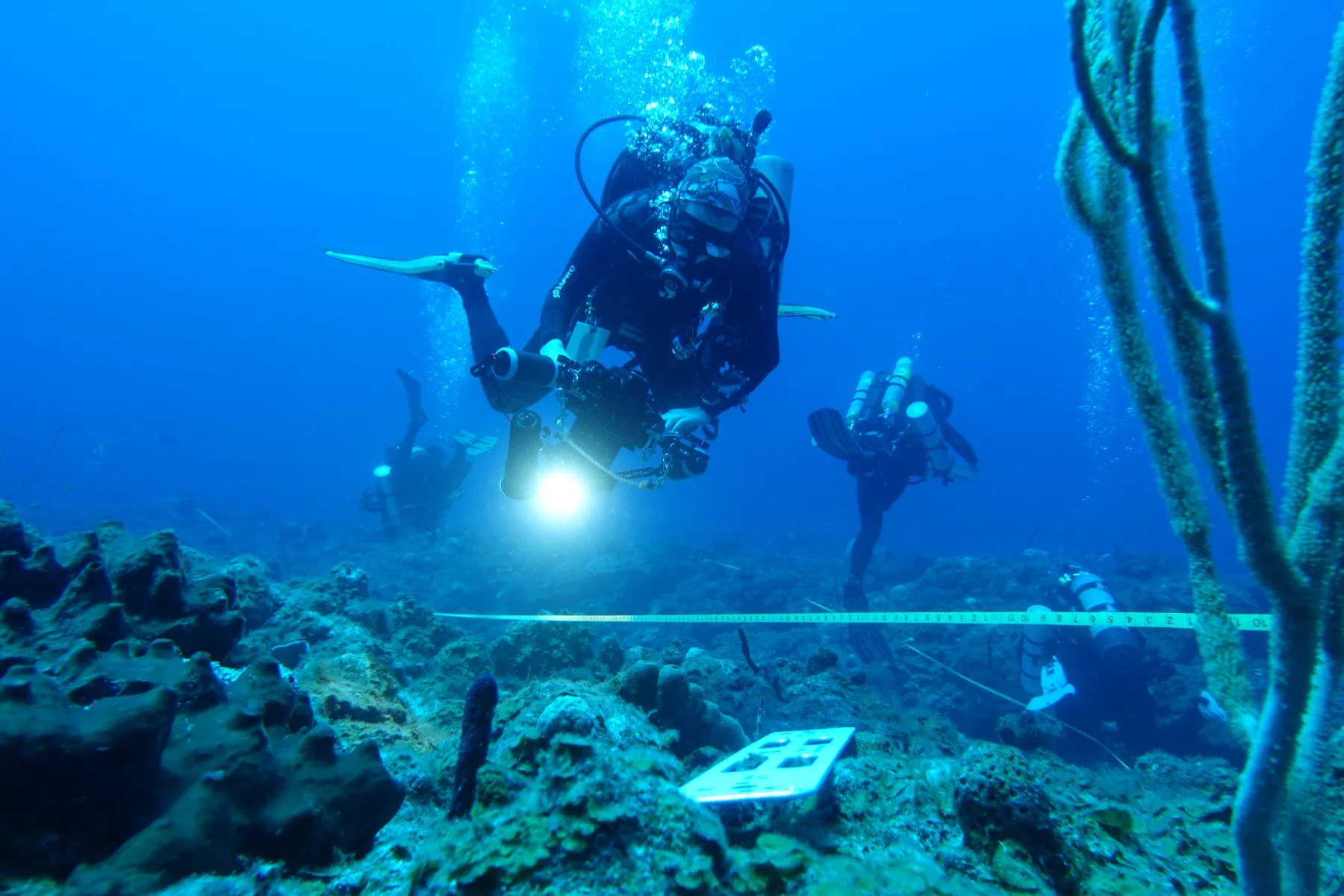
VICARIUS is being developed through extensive reef-monitoring work in the U.S. Virgin Islands, drawing on long-term TCRMP datasets, AUV surveys, 3D mapping, and AI-assisted analysis. These tools are helping researchers understand how reefs altered by storms, disease, and bleaching continue to function and change, while building more efficient and repeatable approaches to monitoring and management.
-

Mangrove Monitoring & Restoration
PLANNED EXPANSION
VICAR plans to extend VICARIUS into mangrove monitoring using aerial drone surveys, 3D mapping, and AI-assisted classification. Development will progress from adapting and testing survey methods to establishing repeatable approaches for assessing mangrove condition and restoration outcomes.
-

Open Ocean Observation
PLANNED EXPANSION
VICAR is extending VICARIUS into open-ocean monitoring by integrating data from autonomous gliders, including water-column measurements and passive acoustic observations. These standardized workflows are designed to connect offshore ocean conditions with changes observed in reef and mangrove ecosystems, while improving data processing, long-term monitoring, and environmental decision-making.