
Watershed Terrestrial Monitoring & Land Use
The Watershed and Land Use team examined how activities on land—such as construction, farming, and land clearing—affected the waters and coral reefs downstream. By monitoring “ridge-to-reef” processes in two pilot watersheds (Salt River Bay on St. Croix and Fish Bay on St. John), researchers tracked when and how rainwater carried soil, nutrients, and pollutants down through guts (streams) to the sea. This effort filled a critical knowledge gap, since almost no prior data existed on these intermittent tropical streams. The team set up rain gauges, stream-level recorders, sediment traps, and water samplers to catch the rare flood events and analyze what was in the runoff. Despite an extended drought in the project’s early years, by 2022 nature provided two tropical storms that finally “flushed” the systems, allowing the team to capture invaluable data on water flow, sediment levels, and pollution pulses moving from the hills to the coast.

The Dorothea gut, St. Thomas. Photo by D. Mele.
Key Accomplishments
By the end of the five-year project, the watershed team had successfully documented how storm runoff can carry land-based pollution to coastal habitats. They pioneered the use of custom-built sediment samplers in V.I. guts and confirmed that even short, intense rain events can send significant amounts of soil downstream. One groundbreaking study found evidence of heavy metals and even volatile organic chemicals in streambed sediments across the island of St. Croix, indicating human pollution in guts for the first time in the territory. The team also experimented with land management solutions: for example, a UVI graduate student built test plots to see if vegetative buffer strips could reduce soil erosion. His findings showed that bare, exposed soils (even on gentle slopes) could rapidly gouge into gullies during a downpour, whereas natural vegetation kept sediment in place. This provided science-based support for conservation practices like maintaining ground cover. The team’s work thus identified which land areas and activities were likely contributing the most to reef-threatening runoff and sedimentation.

The Dorothea gut flows into Dorothea Beach on St. Thomas. Photo by D. Mele.
Impacts: This research has armed local environmental managers with data to better protect coastal water quality. Understanding when and where muddy floodwaters emerge has practical benefits—for example, informing the placement of sediment ponds or restoration of vegetation in upstream areas.
The Watershed team also made a point to involve and educate the community. They worked with local farmers and homeowners in the study watersheds, sharing results and even installing cameras to show dramatic water flows after storms. Over the project, about 50 students (from high school to graduate level) participated through field trips, internships, and lab work. The team gave public tours and talks to roughly 150 community members about how everyone’s activities on land can impact the sea. By 2025, the Watershed & Land Use effort had built momentum to expand monitoring to more sites and had fostered partnerships with V.I. agencies (e.g. Department of Planning and Natural Resources) and federal partners (such as the National Park Service and NOAA). This collaborative groundwork will help the Virgin Islands proactively reduce land-based sources of reef pollution in the future.

Sediment samplers, like this one being pulled from Fish Bay Gut, St. John in this picture, capture flows of suspended sediment particles during flood events, allowing researchers to collect the sample after the storm passes and analyze how much sediment arrived and where it came from. Photo by B. Lancellotti
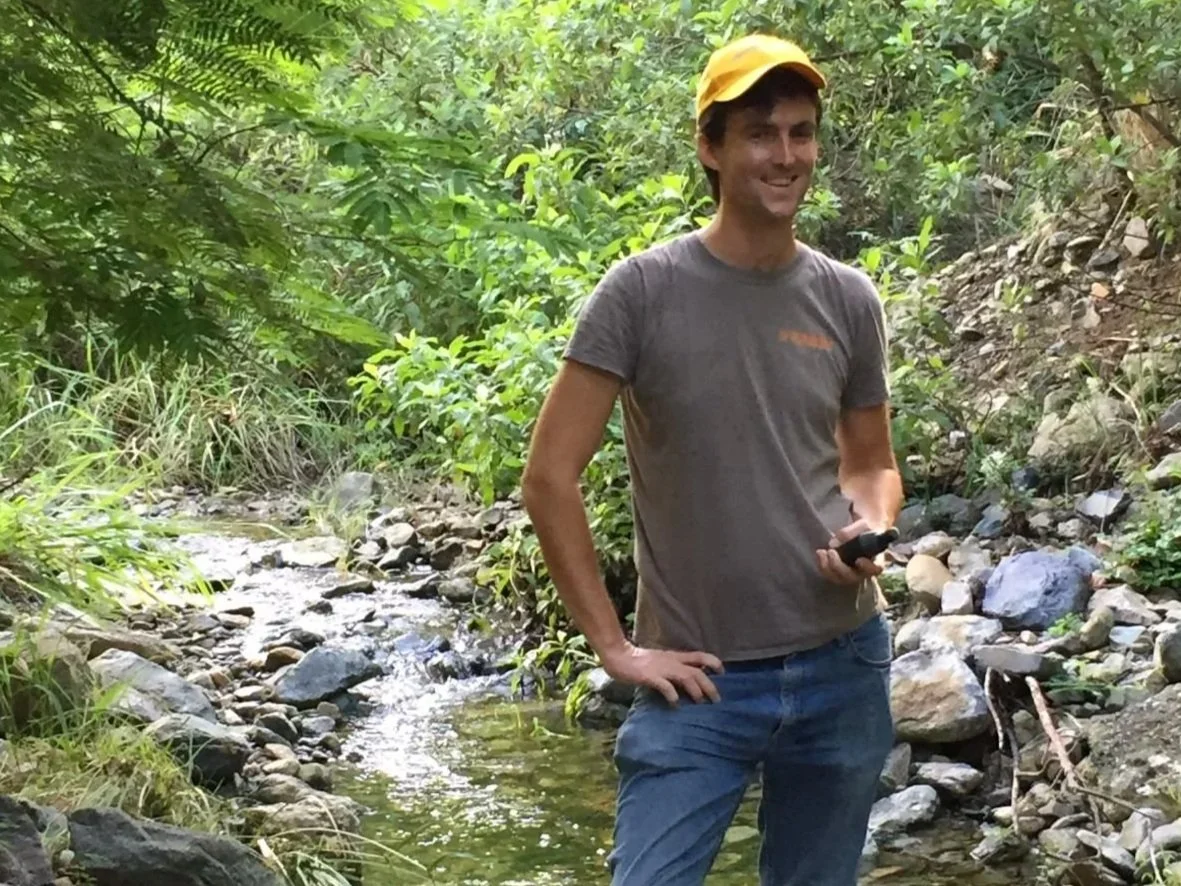
Project Lead: Dr. David Hensley
As a researcher at the University of the Virgin Islands’ School of Agriculture, I take special interest in how soil and water interact in the Virgin Islands in so many important ways in our everyday lives. Soil and water are both precious resources we have to conserve: we rely on these to produce our food, to have clean water to drink, to have safe places to build our homes, to support the beautiful natural environment that we call home, and so much more.
The Ridge to Reef project, and the Watershed and Land Use team, are helping answer some of the critical questions we in the Virgin Islands need to know about our land and water system. I feel particularly honored that I am able to be an interdisciplinary link between our colleagues in the Center for Marine and Environmental Studies and the School of Agriculture. The Ridge to Reef project is proof that, especially when it comes to soil and water, we have a lot of common interests to investigate together.
Additional reading and links: