
Mangrove Ecosystem Function & Recovery
The Mangrove research team studied the “nurseries of the sea” – the mangrove forests fringing the islands – to understand their past and present health and to enhance their recovery. Mangroves are vital for trapping sediment, buffering storm waves, and providing habitat for fish and birds. Unfortunately, over half of the V.I.’s mangrove forests have been lost in the past century. From 2020 to 2025, VI-EPSCoR scientists mapped where different mangrove species once grew and where they were regenerating (or not) after disturbances like hurricanes. They used both historical archives and cutting-edge tools such as drone imagery and GIS mapping to document changes in mangrove coverage over time. At the same time, the team launched the territory’s first science-driven mangrove restoration trials. This included setting up a land-based mangrove nursery to grow seedlings and experimenting with outplanting techniques (for example, testing how planting density or elevation affects young mangrove survival). A parallel goal was to involve the community – from students to fishermen – in appreciating and restoring mangroves, since these coastal forests protect both the environment and livelihoods.
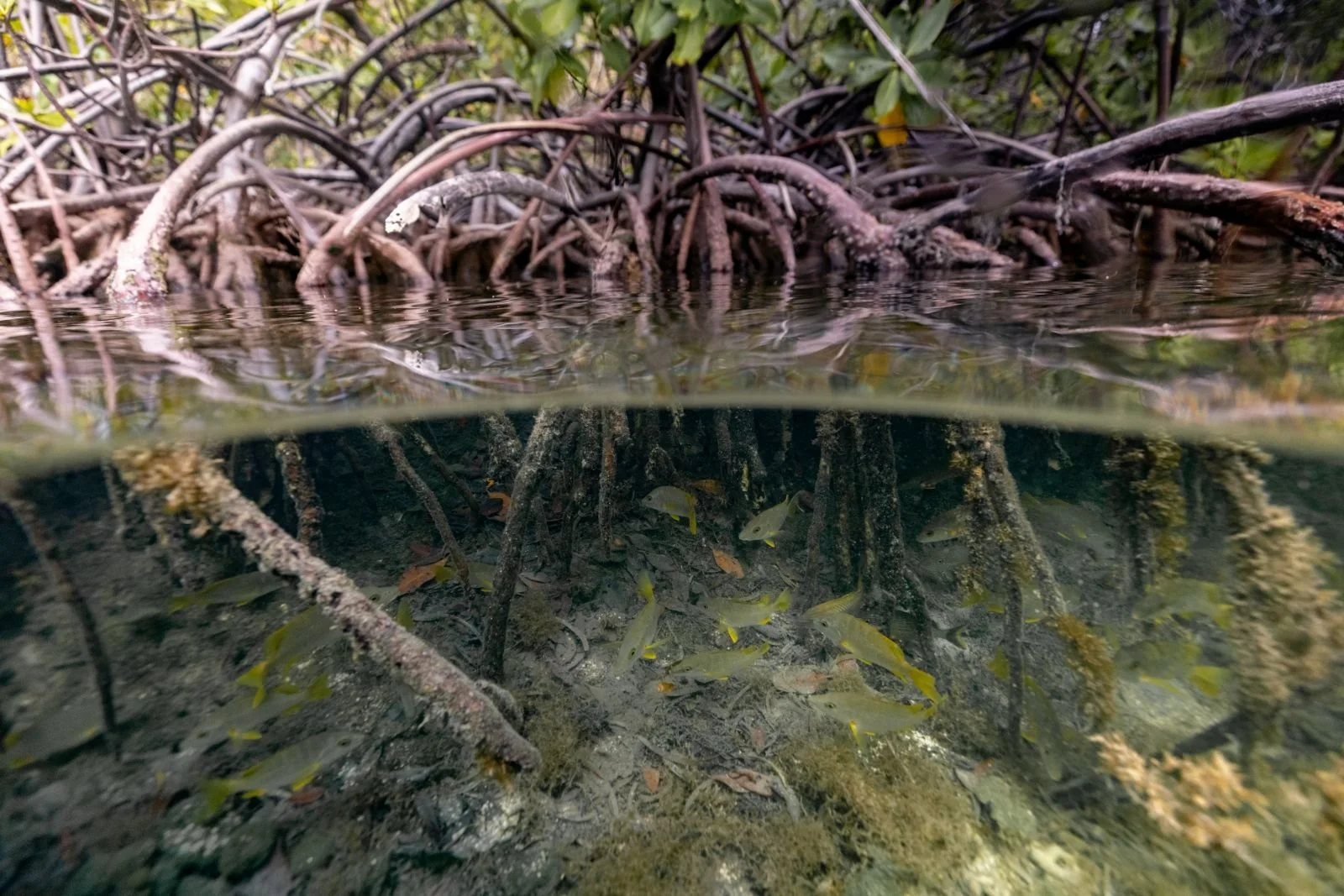
Mangrove roots provide shelter to juvenile fish in the USVI. Photo by D. Mele.
Key Accomplishments
Over two years, the team surveyed 19 mangrove sites across St. Thomas, St. John, and St. Croix, creating the most comprehensive mangrove inventory to date. They achieved FAA drone certification to capture high-resolution aerial images of remote mangrove areas, and they compiled an atlas of historical maps dating back decades to compare past and present mangrove extent. These efforts identified hotspots of mangrove loss and areas with potential for natural regrowth. On the restoration front, the project established a nursery that successfully reared multiple mangrove species. Dozens of nursery-grown seedlings were transplanted at pilot sites (such as Range Cay and Hull Bay) to test survivorship in different conditions. Early results were promising – by 2023, over 110 mangrove seedlings had been planted with help from local high school students and even a neighborhood business, with growth and survival being monitored over time. The team also developed a “Restoration Potential Index” for mangroves, a tool that combines ecological and social data to rank sites where mangrove planting would be most successful and beneficial. Notably, the group didn’t focus only on ecology: they completed community surveys and listening sessions to gather input on mangrove use and perceptions. This social science aspect ensured restoration plans incorporated local knowledge and addressed community priorities.

The Hull Bay, St. Thomas restoration site. Photo by D. Mele.
Impacts: The Mangrove team exemplified community-engaged science. They involved 7 UVI undergraduate and 6 graduate students in all aspects of the research – from drone mapping to muddy fieldwork in the swamps. They also mentored a cadre of Charlotte Amalie High School students, who gained hands-on experience helping with mangrove nursery upkeep and plantings. Through outreach events and a citizen science program, nearly 1,500 people in the Virgin Islands participated in mangrove education and restoration activities by Year 3 of the project. For instance, the team hosted public workshops on mangrove importance and invited volunteers to help plant seedlings at restoration sites. They even produced a short outreach film (aired at local Caribbean cinemas) about the value of mangroves, inspiring viewers to get involved. By project’s end, the Virgin Islands had not only new scientific insights – like a clear picture of how far mangroves have declined and which areas could support recovery – but also an energized network of “mangrove stewards” in the community. The strategic plan’s goals of investigating mangrove change, expanding restoration, and building partnerships were clearly met.
With new restoration techniques refined and a passionate group of local volunteers, the territory is better positioned to restore these critical coastal forests in the years ahead.
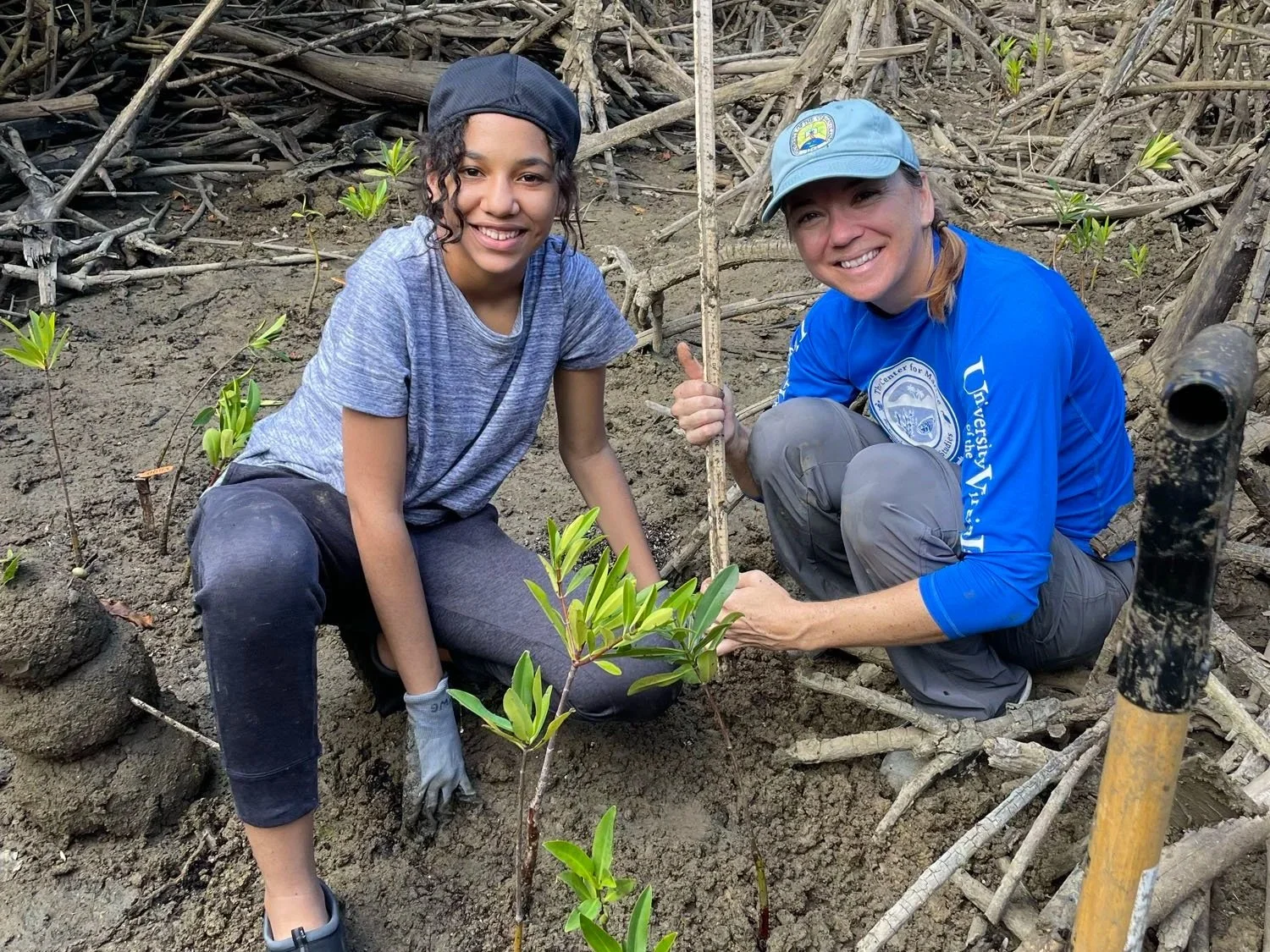
A student participates in mangrove research at the Hull Bay restoration site on St. Thomas. Photo by D. Mele.

Project Lead: Dr. Kristin Grimes
I am a Research Associate Professor in the Center for Marine & Environmental Studies at the University of the Virgin Islands (UVI). My research examines human impacts to nearshore environments, especially mangroves.
At UVI, I teach in the Masters of Marine & Environmental Science program, mentor students, and engage the community through outreach and education, running the Mangroves in the Classroom project and the territory-wide Great Mangrove Cleanups.
I am also the Director for the Virgin Islands Water Resources Research Institute, a network of 54 institutes across the US in partnership with the U.S. Geological Survey.