
Informal Learning
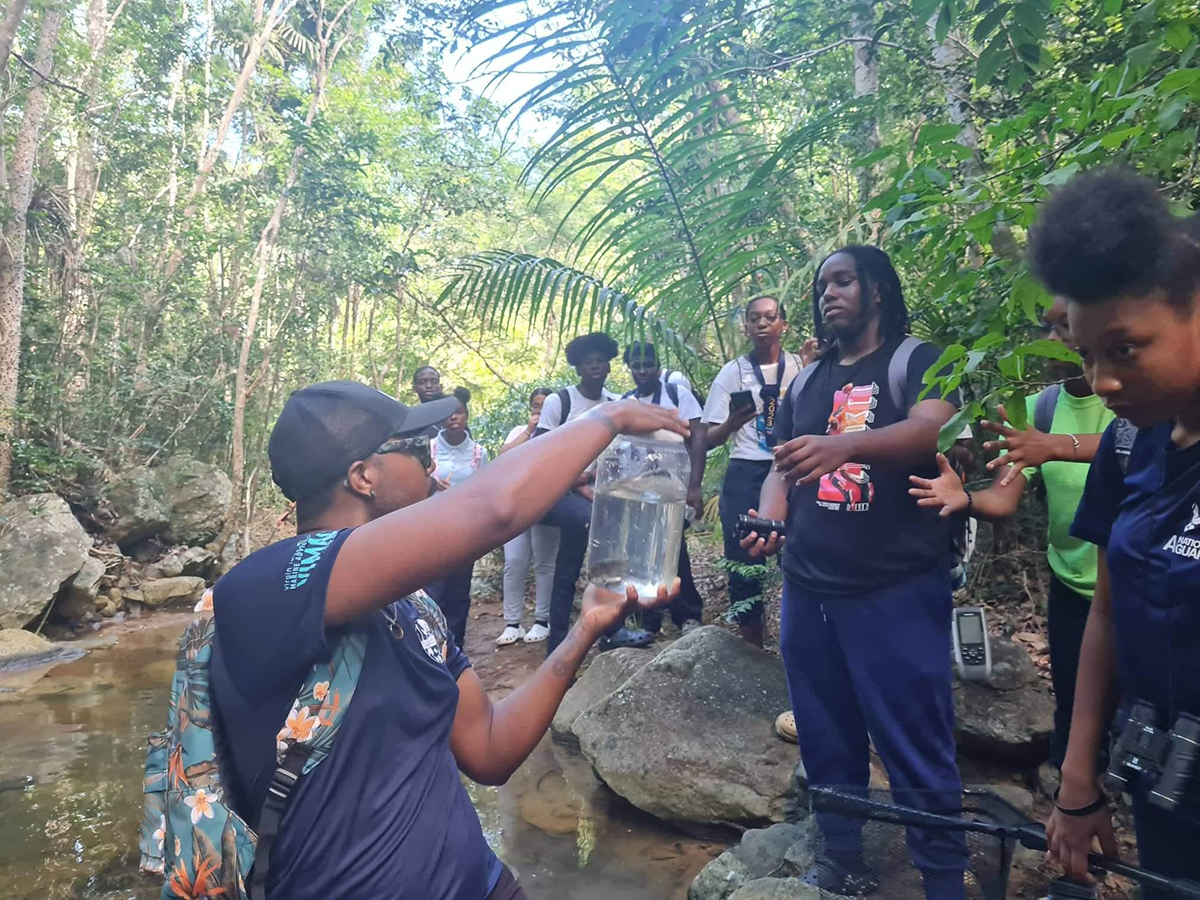
The Informal Learning (IL) program was the outreach heartbeat of the R2R project, aiming to ignite curiosity and scientific understanding outside of formal classrooms. Its mission was to bring science to the community in accessible and culturally relevant ways, thereby broadening participation in STEM – especially among groups historically underrepresented in science. From 2020–2025, the IL team organized public events, citizen science activities, museum partnerships, and media content all centered on the R2R themes (watersheds, coral reefs, mangroves, etc.). The idea was to meet people where they are: at libraries, fairs, even beaches, to share knowledge about the Virgin Islands environment and how to protect it. And with a Community Engagement Specialist dedicated to St. Croix joining the team, the program ensured both island districts were well served.
Mangrove in the USVI. Photo by Dan Mele.
Key Accomplishments
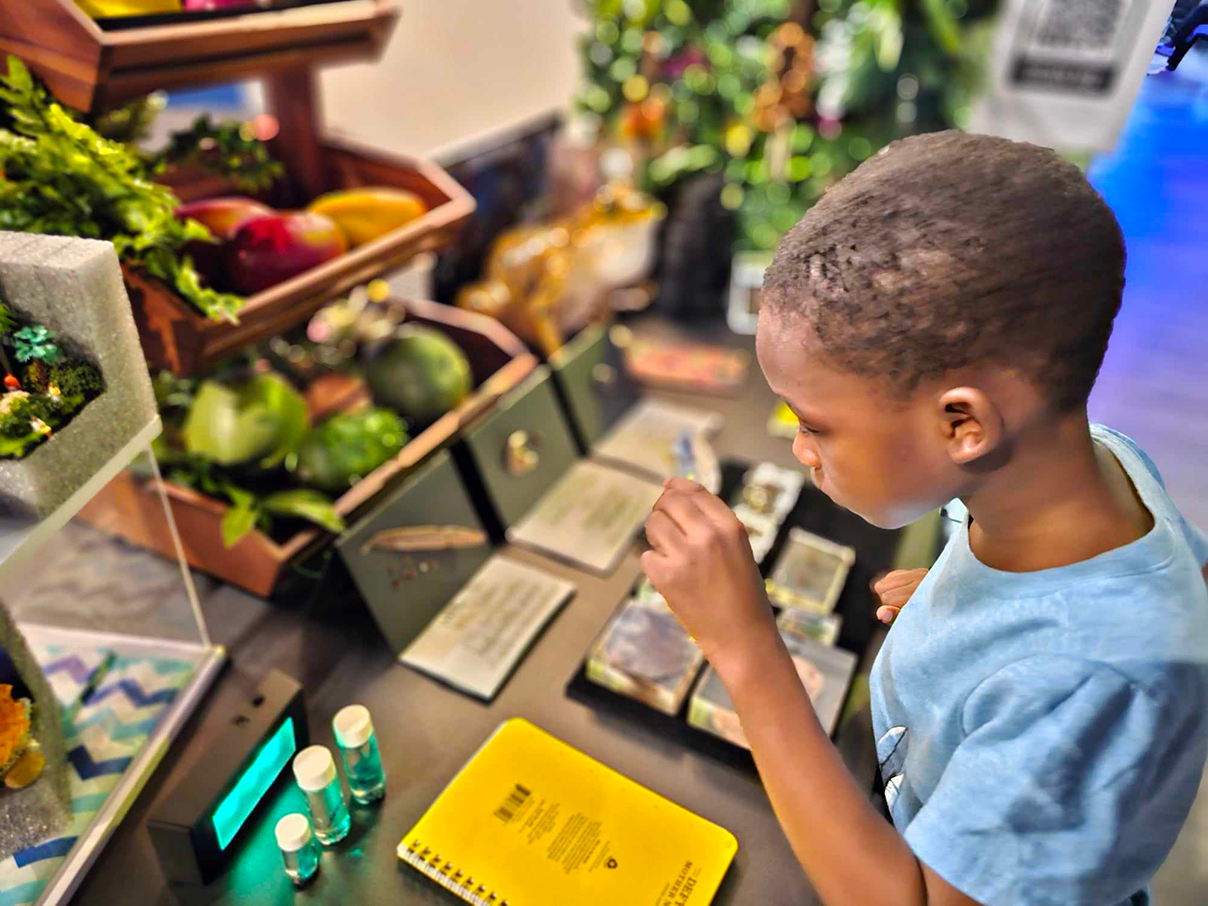
Over five years, Informal Learning reached an unprecedented number of Virgin Islanders. More than 2,000 people of all ages took part in IL-sponsored activities – the highest annual engagement of any EPSCoR project in VI to date. One staple was the return of “STEM Saturdays”, a monthly science fun-day open to the public (often held at places like UVI grounds or community centers). These events let families interact with R2R researchers and students through hands-on demos, like a touch-and-feel exhibit of mangrove critters or a mini “reef in a tank.” By bringing back STEM Saturdays (which had been paused due to storms and COVID), the team provided consistent science learning opportunities in an informal, enjoyable setting.
The IL team also forged new partnerships to extend their reach. Collaborations with the Virgin Islands Children’s Museum in St. Thomas and the VI Marine Advisory Service (VIMAS) meant R2R science content was incorporated into museum displays and youth programs. For example, a corner of the Children’s Museum was turned into a “Ridge to Reef” interactive exhibit where kids could pour water on a model hillside to see how runoff works, or match fish to habitats in a puzzle. On St. Croix, they worked with the Environmental Association (SEA) to co-host the annual Eco-Fair and BioBlitz, engaging hundreds of students in biodiversity hunts and conservation games. At one BioBlitz, over 500 elementary students became “scientists for a day,” teaming up to count species in a local mangrove – an activity that not only taught ecology but also underscored the value of those habitats.
Informal Learning didn’t limit itself to the usual environmental topics. They expanded into themes aligned with R2R but not traditionally in the spotlight – such as Agricultural Science and Food Security (connecting land use to what ends up on our plates), Sustainability and renewable energy, and Acoustic Telemetry (explaining in simple terms how we track fish and turtles). By diversifying content, they kept the community’s interest and showed that science is everywhere, not just in labs. A notable program was the Ocean Explorer summer course for teens, which engaged over 100 high schoolers and even offered scuba diving certification to a select few so they could directly observe coral reefs. Virtual Reality (VR) also made an appearance – the team used VR headsets to give students a 360° virtual dive on a coral reef, an exciting experience for many who had never been underwater.

Impacts: The ripple effects of Informal Learning are profound. Many young participants who had never considered STEM careers got to meet local scientists (who often looked like them and came from the same communities) and were inspired. One example: after a Sea Turtle Research outreach session, a high school student from St. Croix decided to pursue marine biology and later interned with the turtle tagging project – a direct outcome of IL exposure. The program also prioritized reaching underserved groups. They coordinated with public housing community centers and libraries to host science nights, ensuring kids from all neighborhoods had access. By the final year, the team noted increased presence of girls and minority youth in events, indicating progress toward inclusivity.
Additionally, IL efforts fostered a sense of local pride and stewardship. Through events like clean-ups (tied with watershed education) or citizen science (like a smartphone “report erosion” campaign), over a thousand residents actively contributed to observing and improving their environment. Such engagement creates informed citizens. For instance, fishermen who attended a Q&A on coral disease learned why certain areas were closed for coral protection and became supporters of the measures, sharing the knowledge with peers rather than seeing it as just restrictions.
The IL team also innovated in science communication. They worked with the R2R Communications team to produce short videos and social media content featuring local research – one popular video “Searching for Sea Turtles in Carriacou” followed VI researchers abroad and got wide shares on Facebook and YouTube. They even re-introduced an old favorite, the “STEM on Toast” radio segments, where a scientist would chat on a morning show about their work in layman’s terms. (Image suggestion: A snapshot from a community science fair booth where children are gathered around a small water-table model of an island (complete with mini coral reefs and houses), learning how water flows from ridge to reef – illustrating informal learning in action.)
In summary, the Informal Learning program met and exceeded its strategic goals: it broadened the reach of science to new audiences (young and old), built bridges between scientists and the community, and emphasized culturally relevant, place-based learning. By demystifying science and making it fun, it helped nurture a more science-aware society in the Virgin Islands, which is a lasting legacy of the R2R project.

Project Lead: Jarvon Stout
I have a Bachelor of Science in Marine Biology from the University of the Virgin Islands and have been engaged in marine and environmental science-focused outreach for the past 6 years.
My goal for this project is to play a pivotal role in defining what it means to do effective, impactful outreach. In doing so, I hope to create a model that can be used and adapted by other outreach/ informal learning specialists trying to engage and serve their communities.
Additional reading and links:
Lorem ipsum dolor sit amet consectetur adipiscing elit. Quisque faucibus ex sapien vitae pellentesque sem placerat. In id cursus mi pretium tellus duis convallis. Tempus leo eu aenean sed diam urna tempor. Pulvinar vivamus fringilla lacus nec metus bibendum egestas. Iaculis massa nisl malesuada lacinia integer nunc posuere. Ut hendrerit semper vel class aptent taciti sociosqu. Ad litora torquent per conubia nostra inceptos himenaeos.
Lorem ipsum dolor sit amet consectetur adipiscing elit. Quisque faucibus ex sapien vitae pellentesque sem placerat. In id cursus mi pretium tellus duis convallis. Tempus leo eu aenean sed diam urna tempor. Pulvinar vivamus fringilla lacus nec metus bibendum egestas. Iaculis massa nisl malesuada lacinia integer nunc posuere. Ut hendrerit semper vel class aptent taciti sociosqu. Ad litora torquent per conubia nostra inceptos himenaeos.
Lorem ipsum dolor sit amet consectetur adipiscing elit. Quisque faucibus ex sapien vitae pellentesque sem placerat. In id cursus mi pretium tellus duis convallis. Tempus leo eu aenean sed diam urna tempor. Pulvinar vivamus fringilla lacus nec metus bibendum egestas. Iaculis massa nisl malesuada lacinia integer nunc posuere. Ut hendrerit semper vel class aptent taciti sociosqu. Ad litora torquent per conubia nostra inceptos himenaeos.
Lorem ipsum dolor sit amet consectetur adipiscing elit. Quisque faucibus ex sapien vitae pellentesque sem placerat. In id cursus mi pretium tellus duis convallis. Tempus leo eu aenean sed diam urna tempor. Pulvinar vivamus fringilla lacus nec metus bibendum egestas. Iaculis massa nisl malesuada lacinia integer nunc posuere. Ut hendrerit semper vel class aptent taciti sociosqu. Ad litora torquent per conubia nostra inceptos himenaeos.
Lorem ipsum dolor sit amet consectetur adipiscing elit. Quisque faucibus ex sapien vitae pellentesque sem placerat. In id cursus mi pretium tellus duis convallis. Tempus leo eu aenean sed diam urna tempor. Pulvinar vivamus fringilla lacus nec metus bibendum egestas. Iaculis massa nisl malesuada lacinia integer nunc posuere. Ut hendrerit semper vel class aptent taciti sociosqu. Ad litora torquent per conubia nostra inceptos himenaeos.