
Undergraduate Education Research
The Undergraduate Education Research (UER) initiative was a study-within-the-study, examining how to improve the success of UVI students in STEM fields. In particular, it looked at ways to increase the recruitment, retention, and persistence of underrepresented minority students in science – a core aim of VI-EPSCoR’s workforce development mission. The project took a hard look at the undergraduate experience at UVI and piloted interventions to boost student engagement and academic performance, especially in the critical first year. It also sought to understand what factors might be impacting UVI students’ decisions to stay in STEM majors or not, ranging from academic preparation to social support.

Mangrove in the USVI. Photo by Dan Mele.
Key Accomplishments
Strategies and Interventions: One major effort under UER was redesigning the First-Year Experience for STEM majors. The team, led by education researcher Dr. Michele Guannel, recognized that the COVID-19 pandemic had disrupted learning for many incoming students, leading to gaps in math and science skills and lower confidence. In response, they introduced “resilience-themed” experiential learning projects into the freshman courses SCI 100 (Natural World) and SSC 100 (Social Sciences) that all UVI students take. These projects had students actively engage with topics like food security, climate change, and yes, the R2R research itself – for example, a cohort of freshmen might analyze data on local rainfall changes or try a simple experiment on water filtration (linking to the watershed theme). The idea was to make science relevant and hands-on from day one, showing students how it connects to island life and careers, and thus motivate them to stick with STEM. Early anecdotal evidence suggested this made classes more engaging; instructors reported higher attendance and participation when students were doing projects (even remotely, when hybrid learning was necessary).
The UER investigators also planned a “Resilience Leaders” program as a next-step mentorship for students beyond first year. Although its full implementation was delayed, the concept was to pair underclassmen with faculty and peer mentors to conduct small-group research tied to R2R themes (like monitoring a nearby mangrove or designing a low-cost sensor). Even without the formal program in place, some elements were tried: for instance, a few interested sophomores were invited to assist grad students in their fieldwork as a trial mentorship, which both groups found rewarding.
On the research side, the UER team collected data through surveys and focus groups to identify barriers students face. They found, for example, that many UVI STEM students work long hours off-campus or have significant family responsibilities, which can impede study time – hence, strategies like flexible scheduling and providing on-campus research jobs were recommended. They also noted that a sense of belonging in STEM was crucial; students who participated in STEM clubs or research felt more committed to their major. This informed the creation of learning communities in classes, where students were encouraged to form study groups and tackle problems collaboratively.
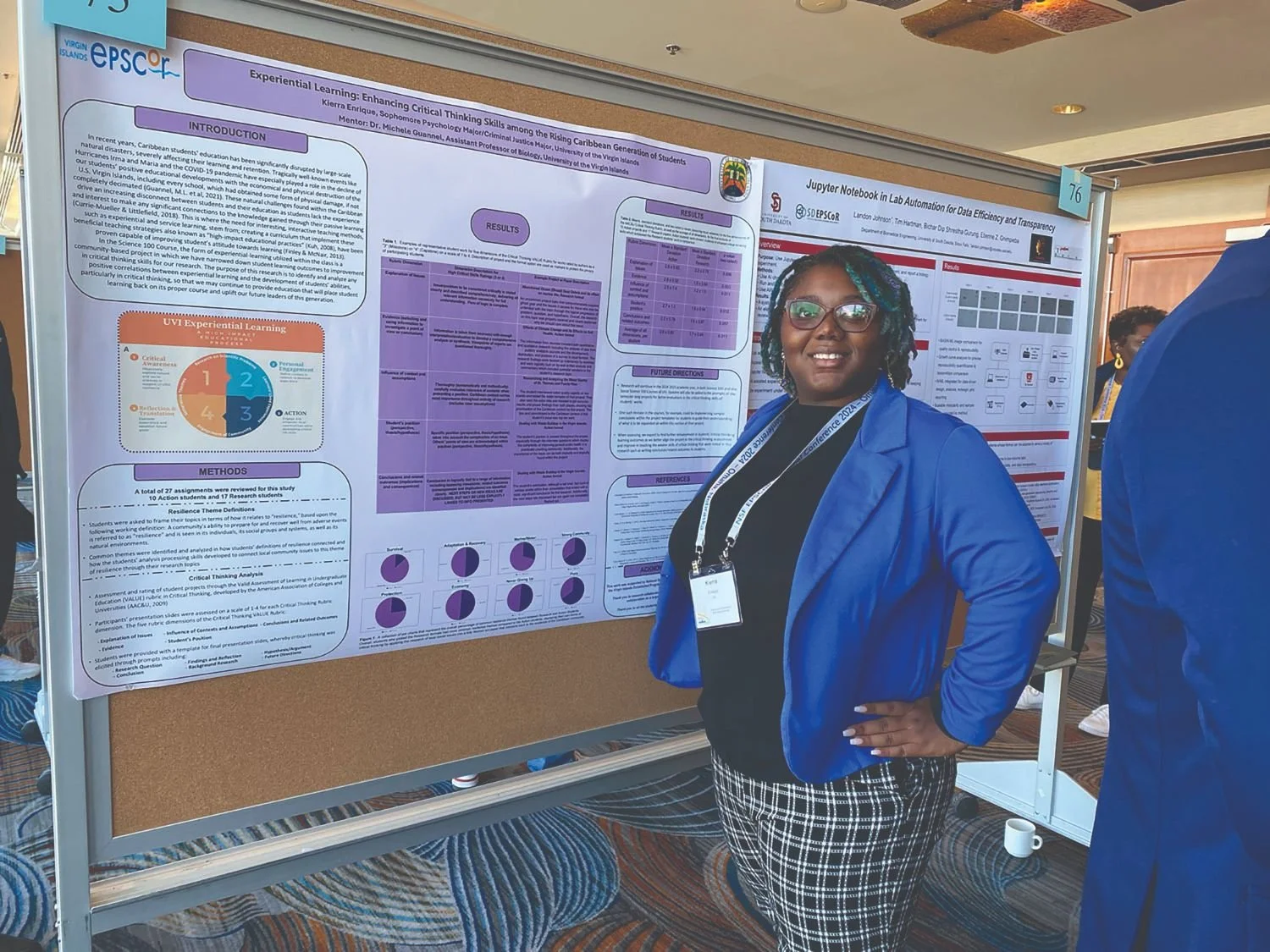
Outcomes: By the end of the project, the Undergraduate Education Research efforts had led to concrete changes at UVI. The freshman seminar enhancements were institutionalized – meaning future cohorts will continue to do these resilience projects as part of their curriculum. Feedback from students indicated these projects made the coursework “more real” and boosted their interest in environmental science. One measurable outcome was an increase in the number of freshmen declaring STEM majors at the end of their first year, compared to prior years (the data was still being analyzed in 2025, but preliminary numbers were positive). Moreover, UVI faculty involvement in UER has seeded a culture of evidence-based teaching. Several faculty who received the mini-grants started applying what they learned to their teaching; for example, one biology professor now regularly uses brief weekly reflective surveys in class to check in on student understanding and well-being, a practice stemming from UER findings about early intervention.
Another subtle but important impact: bridging the gap between research and teaching. Through UER, the R2R scientists became more engaged with undergraduate education – many offered to give guest lectures or involve undergrads in their labs. This cross-pollination meant students heard about cutting-edge local research (like coral disease or acoustic tracking of turtles) in their lectures, which can be inspiring. Indeed, some students reported that learning about R2R projects in class made them consider careers in marine and environmental science they hadn’t before. (Image suggestion: A photo of UVI freshmen presenting a poster or project in a classroom, perhaps something like a simple experiment or data analysis they did on a local environmental topic, would highlight these new hands-on learning experiences.)
In conclusion, the Undergraduate Education Research component provided valuable insights into improving STEM education outcomes in the Virgin Islands context. It underscored the need for supportive mentoring, active learning, and connecting coursework to real-world island issues. The lessons from this will guide UVI and VI-EPSCoR’s future educational initiatives, ensuring more talented local students not only enter STEM fields but thrive and become the Territory’s next generation of scientists and problem-solvers.

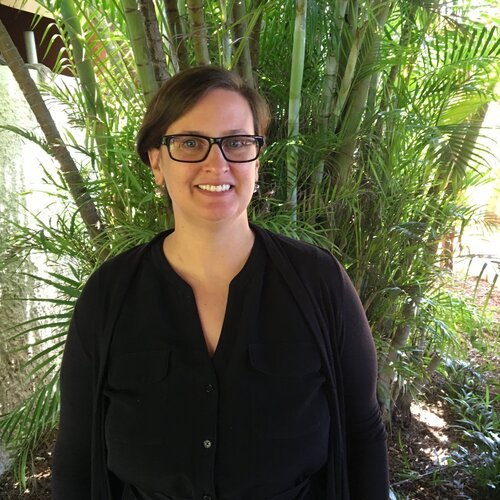
Project Lead: Dr. Michele Guannel
Dr. Michele Guannel is an Assistant Professor of Biology on the St. Thomas campus of the University of the Virgin Islands. She holds a B.A. in Biology from Smith College and M.S. and Ph.D. degrees in Oceanography from the University of Washington. At these institutions and through other positions, she has taught elementary students to postdoctoral scholars for over 20 years. Dr. Guannel’s research explores the power of service learning and other high-impact practices, to increase recruitment, retention, and persistence of UVI students in STEM fields. She measures the impacts of project-based learning and real-world applications through quantitative assessments of student affinity for, and engagement in, STEM fields, as well as the phenomenological analysis of themes that emerge from students’ lived experiences. In addition to serving as a research lead with the VI-EPSCoR grant, she is the Co-PI for Education Research on the S-STEM grant with the Master’s of Marine and Environmental Science (MMES) program and an educational researcher with the Research Initiative for Scientific Enhancement (RISE) grant, funded by the National Institutes of Health (NIH).
Dr. Guannel is grateful for a network of VI secondary school educators; the Science 100 teaching team, and a growing team of colleagues who empower students, from the very first semester at UVI. Dr. Guannel comes to the VI due to Caribbean family connections, a love of the ocean, and a deep appreciation for the spirit, humor, and strength of VI communities.
Additional reading and links:
Lorem ipsum dolor sit amet consectetur adipiscing elit. Quisque faucibus ex sapien vitae pellentesque sem placerat. In id cursus mi pretium tellus duis convallis. Tempus leo eu aenean sed diam urna tempor. Pulvinar vivamus fringilla lacus nec metus bibendum egestas. Iaculis massa nisl malesuada lacinia integer nunc posuere. Ut hendrerit semper vel class aptent taciti sociosqu. Ad litora torquent per conubia nostra inceptos himenaeos.
Lorem ipsum dolor sit amet consectetur adipiscing elit. Quisque faucibus ex sapien vitae pellentesque sem placerat. In id cursus mi pretium tellus duis convallis. Tempus leo eu aenean sed diam urna tempor. Pulvinar vivamus fringilla lacus nec metus bibendum egestas. Iaculis massa nisl malesuada lacinia integer nunc posuere. Ut hendrerit semper vel class aptent taciti sociosqu. Ad litora torquent per conubia nostra inceptos himenaeos.
Lorem ipsum dolor sit amet consectetur adipiscing elit. Quisque faucibus ex sapien vitae pellentesque sem placerat. In id cursus mi pretium tellus duis convallis. Tempus leo eu aenean sed diam urna tempor. Pulvinar vivamus fringilla lacus nec metus bibendum egestas. Iaculis massa nisl malesuada lacinia integer nunc posuere. Ut hendrerit semper vel class aptent taciti sociosqu. Ad litora torquent per conubia nostra inceptos himenaeos.
Lorem ipsum dolor sit amet consectetur adipiscing elit. Quisque faucibus ex sapien vitae pellentesque sem placerat. In id cursus mi pretium tellus duis convallis. Tempus leo eu aenean sed diam urna tempor. Pulvinar vivamus fringilla lacus nec metus bibendum egestas. Iaculis massa nisl malesuada lacinia integer nunc posuere. Ut hendrerit semper vel class aptent taciti sociosqu. Ad litora torquent per conubia nostra inceptos himenaeos.
Lorem ipsum dolor sit amet consectetur adipiscing elit. Quisque faucibus ex sapien vitae pellentesque sem placerat. In id cursus mi pretium tellus duis convallis. Tempus leo eu aenean sed diam urna tempor. Pulvinar vivamus fringilla lacus nec metus bibendum egestas. Iaculis massa nisl malesuada lacinia integer nunc posuere. Ut hendrerit semper vel class aptent taciti sociosqu. Ad litora torquent per conubia nostra inceptos himenaeos.