
Coral Reef Resilience
The Coral Reef Resilience team tackled one of the most pressing questions for our time: Why do some coral reefs persist and recover after disturbances while others decline? Reefs in the USVI have endured hurricanes, mass bleaching events, disease outbreaks, and more. Yet in certain spots, corals have shown surprising resilience – for instance, some reefs rebound with baby corals after a bleaching, or resist algal overgrowth thanks to robust herbivore populations. Led by Dr. Tyler Smith, the team aimed to identify the key traits and conditions that make a reef resilient. They examined factors like biodiversity (do diverse reefs fare better?), connectivity (do reefs with upstream larval sources recover faster?), and environmental conditions (does cooler water or less pollution help survival?). To do this, they leveraged an extraordinary collection of over 40 long-term datasets on USVI coral reefs, many gathered through the Territorial Coral Reef Monitoring Program and past studies. By synthesizing years of data on coral cover, water quality, temperature, and fish communities across different sites, the researchers looked for patterns of resistance and recovery.

Mangrove in the USVI. Photo by Dan Mele.
Key Accomplishments
One of the first achievements was purely foundational but crucial: compiling and standardizing decades’ worth of reef data from various agencies and researchers. This created one of the best-integrated pictures of coral reef ecosystem health in the Caribbean. With this in hand, the team carried out analyses to pinpoint resilience indicators. They found that sites with certain characteristics tended to bounce back better after the severe 2005 and 2010 bleaching events. For example, reefs that retained at least a threshold level of herbivorous fish (grazers like parrotfish) had a higher likelihood of coral recovery, presumably because those fish kept algae in check and allowed new corals to settle. Reefs with greater coral species diversity also showed more stability – no single bleaching or disease could knock out all coral types, so some hardy species would re-populate the area. Another finding was the importance of larval supply: using computer modeling in partnership with the Oceanography team, the scientists demonstrated that reefs receiving coral larvae from multiple upstream sources (other islands or distant reefs) tended to recover faster after a disturbance, highlighting connectivity as a resilience factor.
To test ideas experimentally, the Coral Reef Resilience group also conducted outplanting experiments in the field (in collaboration with the Coral Restoration team). By planting nursery-grown coral fragments on reefs in different environmental settings, they observed how growth and survival varied. Early results suggested that corals outplanted on reefs with less sediment and better water quality had significantly higher survival over one year, underscoring that reducing land-based runoff can directly improve reef resilience – a finding very much in line with the ridge-to-reef concept. The project also documented some “bright spots”: reefs around certain offshore cays and in Marine Protected Areas showed an ability to resist coral disease and bleaching longer than average, likely due to factors like favorable currents or minimal local stressors. These bright spots provide hopeful models, and the team has been working with local managers to prioritize them for conservation (ensuring they remain refuges that can seed other reefs with larvae).
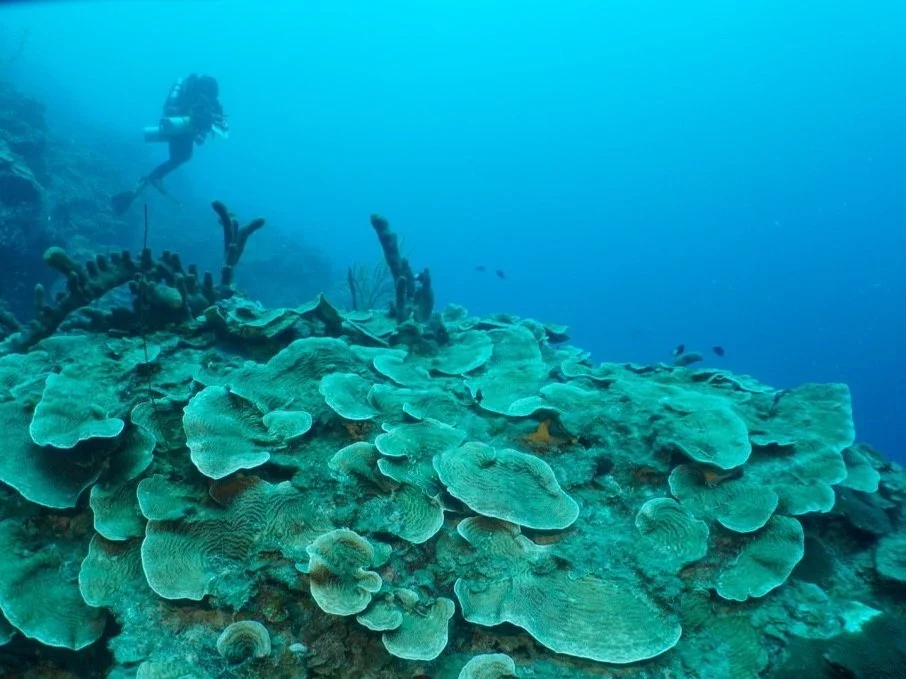
Impacts for Management: By 2025, the Coral Reef Resilience team was able to give the Virgin Islands a set of science-based recommendations on what to protect and monitor. For instance, their work confirmed that maintaining fish herbivore populations is critical – which supports measures like fishing regulations for parrotfish and surgeonfish, as already enacted in local waters. It also highlighted that diversity matters: protecting a wide array of coral species (not just focusing on a few) is important, as is preserving reef structural complexity which often correlates with biodiversity. The extensive data integration they performed was itself a legacy; all 40+ datasets have been organized for ongoing use at UVI and DPNR to track reef health trends. Additionally, the project’s investment in technology (such as environmental sensors and current modeling) has enabled more predictive capability – managers can now better predict which reefs might recover from, say, a bleaching event based on the traits identified (good herbivory, connectivity, etc.). In terms of outreach, Dr. Smith and colleagues communicated these findings through public lectures and a special exhibit at the VI Children’s Museum focusing on “reef resilience.” They translated complex concepts into analogies a general audience can appreciate (e.g., comparing a resilient reef to a diverse garden that survives pests). The core message from this research was empowering: if we manage local stressors, some reefs can survive global threats. By emphasizing actions like curbing pollution and protecting key species, the Coral Reef Resilience effort provided a hopeful path forward in the fight to save coral reefs for future generations.


Dr. Tyler Smith
I am a coral reef ecologist interested in the dynamics of coral reef populations, physical and anthropogenic forcing of ecological systems, and human health aspects of coral ecology. I’m a researcher, teacher and student mentor at the University of the Virgin Islands and research coordinator for the US Virgin Islands Coral Reef Monitoring Program.
My current research focuses on the impacts of natural and man-made disturbances on coral reefs, the ecology of deeper coral ecosystems that form below 30m of water depth, reef refugia, and ecological aspects of Ciguatera Fish Poisoning.
“I hope that this project will provide the type of information that can be used to increase coral reef management in the face of massive disturbances. I also hope that we will uncover important areas of research that are still needed to improve our management of coral reefs.” - Tyler Smith
Additional reading and links:
Lorem ipsum dolor sit amet consectetur adipiscing elit. Quisque faucibus ex sapien vitae pellentesque sem placerat. In id cursus mi pretium tellus duis convallis. Tempus leo eu aenean sed diam urna tempor. Pulvinar vivamus fringilla lacus nec metus bibendum egestas. Iaculis massa nisl malesuada lacinia integer nunc posuere. Ut hendrerit semper vel class aptent taciti sociosqu. Ad litora torquent per conubia nostra inceptos himenaeos.
Lorem ipsum dolor sit amet consectetur adipiscing elit. Quisque faucibus ex sapien vitae pellentesque sem placerat. In id cursus mi pretium tellus duis convallis. Tempus leo eu aenean sed diam urna tempor. Pulvinar vivamus fringilla lacus nec metus bibendum egestas. Iaculis massa nisl malesuada lacinia integer nunc posuere. Ut hendrerit semper vel class aptent taciti sociosqu. Ad litora torquent per conubia nostra inceptos himenaeos.
Lorem ipsum dolor sit amet consectetur adipiscing elit. Quisque faucibus ex sapien vitae pellentesque sem placerat. In id cursus mi pretium tellus duis convallis. Tempus leo eu aenean sed diam urna tempor. Pulvinar vivamus fringilla lacus nec metus bibendum egestas. Iaculis massa nisl malesuada lacinia integer nunc posuere. Ut hendrerit semper vel class aptent taciti sociosqu. Ad litora torquent per conubia nostra inceptos himenaeos.
Lorem ipsum dolor sit amet consectetur adipiscing elit. Quisque faucibus ex sapien vitae pellentesque sem placerat. In id cursus mi pretium tellus duis convallis. Tempus leo eu aenean sed diam urna tempor. Pulvinar vivamus fringilla lacus nec metus bibendum egestas. Iaculis massa nisl malesuada lacinia integer nunc posuere. Ut hendrerit semper vel class aptent taciti sociosqu. Ad litora torquent per conubia nostra inceptos himenaeos.
Lorem ipsum dolor sit amet consectetur adipiscing elit. Quisque faucibus ex sapien vitae pellentesque sem placerat. In id cursus mi pretium tellus duis convallis. Tempus leo eu aenean sed diam urna tempor. Pulvinar vivamus fringilla lacus nec metus bibendum egestas. Iaculis massa nisl malesuada lacinia integer nunc posuere. Ut hendrerit semper vel class aptent taciti sociosqu. Ad litora torquent per conubia nostra inceptos himenaeos.