
Oceanography
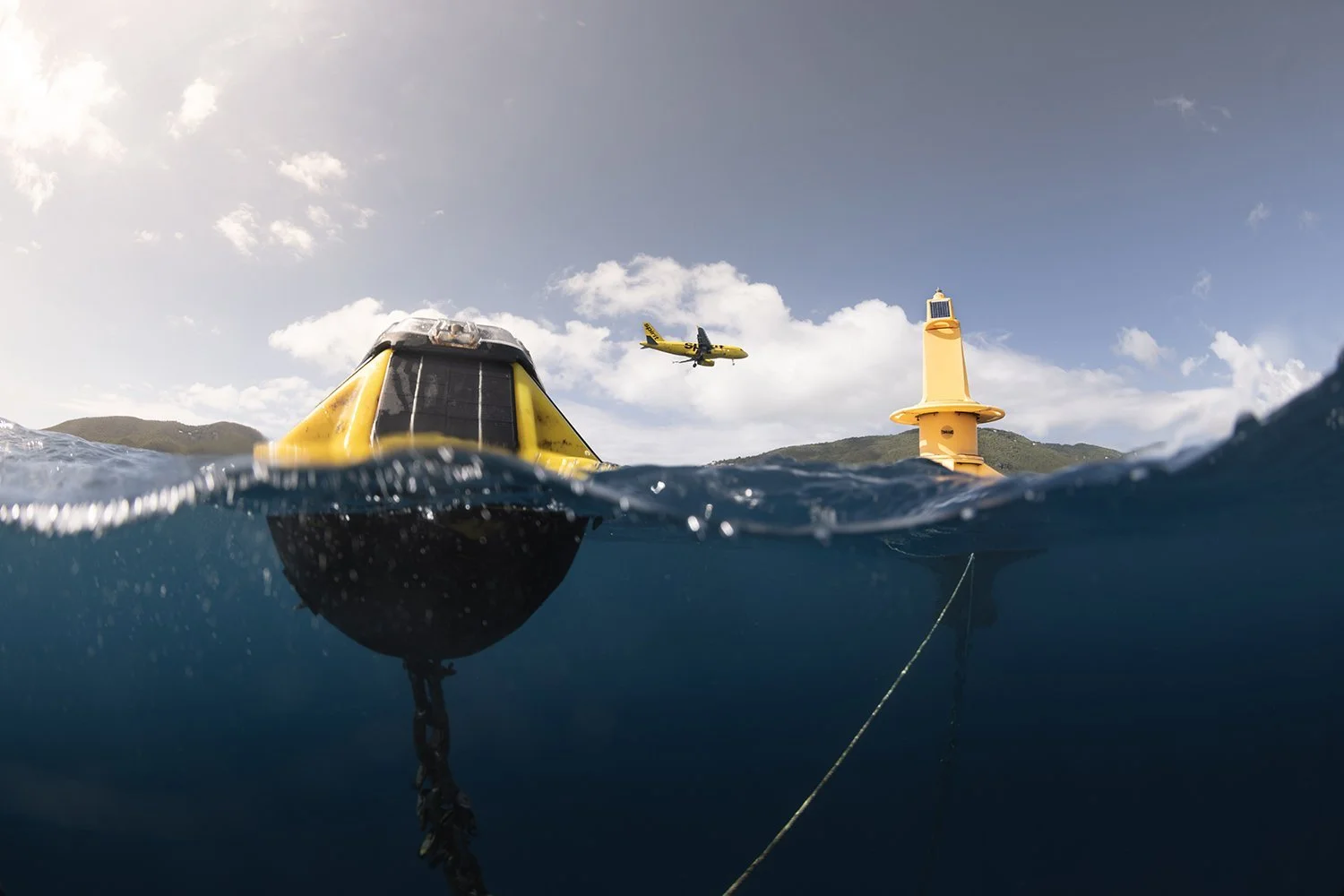
The Oceanography team served as the connective thread for the entire Ridge to Reef project, examining how ocean conditions around the USVI influence reef ecosystems and interact with other factors like watershed runoff. The team’s work included ocean current modeling, water quality monitoring, and larval dispersal studies. One major aim was to develop high-resolution oceanographic models to simulate currents, temperature, and other factors around the Virgin Islands in unprecedented detail. Such models help predict how coral larvae or fish eggs travel between reefs, how pollutants spread, or how climate changes (like warming seas) might impact local waters. Another goal was to collect on-the-ground (or rather, in-the-water) measurements to ground-truth these models – for example, deploying ocean sensors at key sites, including near coral nurseries and fish spawning areas, to record real-time data on tides, currents, and water quality.
Mangrove in the USVI. Photo by Dan Mele.
Key Accomplishments
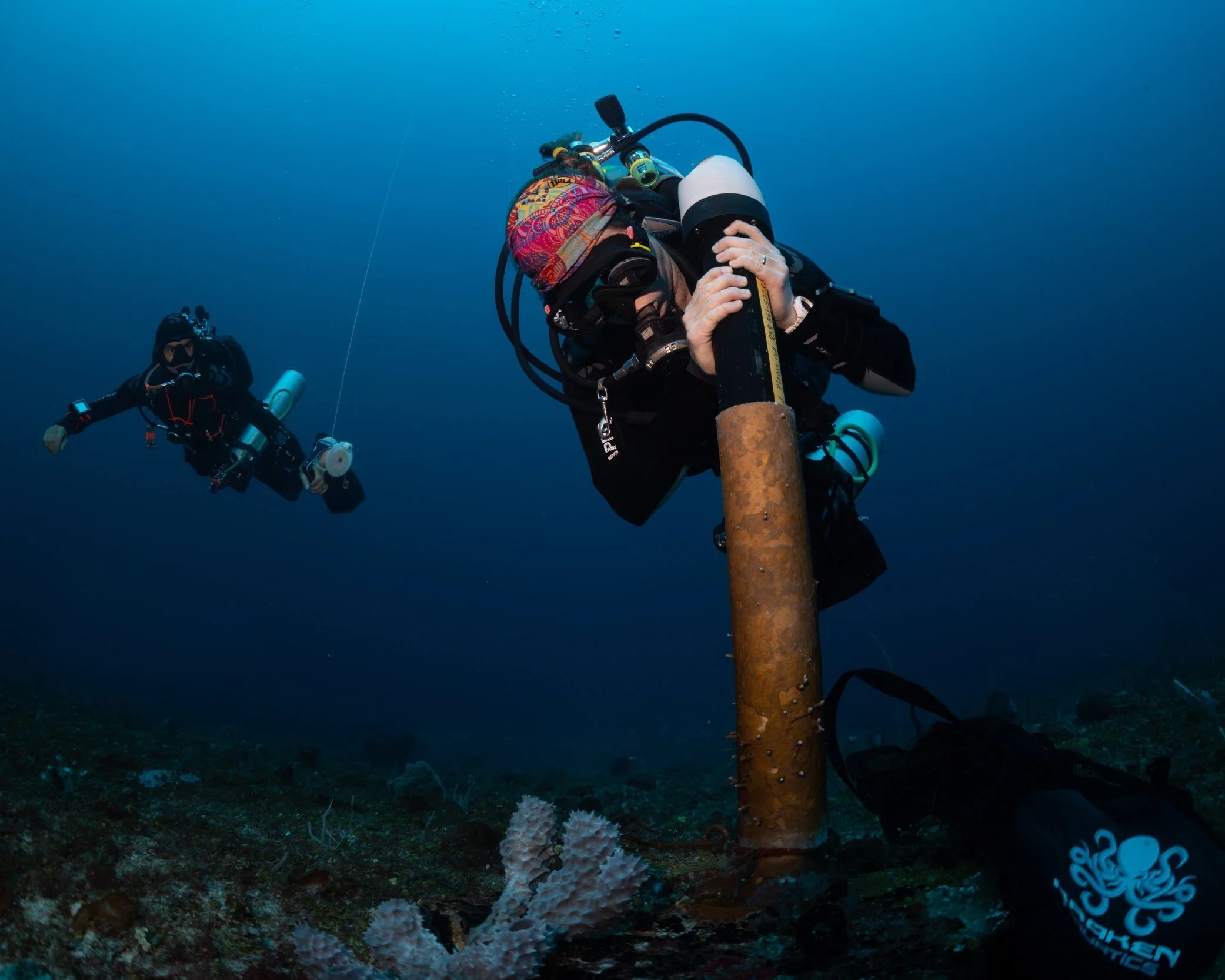
By 2025, VI-EPSCoR had significantly boosted the Territory’s oceanographic capacity. The team developed the US Caribbean Regional Ocean Modeling System (USCROMS), a sophisticated computer model that can simulate ocean circulation around the USVI and neighboring regions. This model reached very fine vertical and horizontal resolution after the team collaborated with Louisiana State University to run it on powerful supercomputers. As a result, USCROMS can resolve small-scale features like eddies and upwellings that earlier models missed. Already, the model output led to two scientific publications and is being applied to questions such as where fish larvae from a St. Croix reef might end up after a spawning event. In parallel, the team deployed new oceanographic instruments in local waters. They strategically placed Acoustic Doppler Current Profilers (ADCPs) at known parrotfish spawning aggregation sites and coral restoration sites to measure water flow dynamics at those locations. These ADCPs captured fine-scale current patterns that can affect larval dispersal and nutrient transport. The data will, for instance, feed into models predicting how quickly coral spawn or fish eggs drift from one bay to another.
A crown jewel achievement was securing a prestigious NSF grant for major research infrastructure: the project obtained two autonomous ocean glider vehicles for UVI. These gliders are like undersea drones that can roam the coastal ocean, continuously measuring conditions (temperature, salinity, currents, etc.) and transmitting data in near real-time. This is a game-changer for the territory – it’s the first time the USVI has had its own ocean gliders. With them, scientists will be able to monitor developing storms, detect coral-bleaching-prone hot water masses, or even track plankton blooms that might relate to fish spawning events. The gliders directly enhance local research infrastructure and will keep working long after the R2R grant. Additionally, the Oceanography team integrated with others: they helped the Coral Reef Resilience group by sharing model outputs of wave stress and temperature anomalies, and they worked with the Fish team to incorporate ocean variables (like currents and temperatures at spawning sites) into analyses of fish behavior.
Impacts: The investments in oceanography filled critical gaps in understanding and technical ability. Practically, having a high-resolution ocean model means better forecasting of ocean conditions – for example, resource managers can anticipate the spread of a coral disease outbreak or a pollution spill with more confidence. The real-time data streaming from new instruments (ADCPs, gliders) was made accessible to project partners and students, creating valuable learning tools. In fact, students at UVI had the opportunity to assist in glider deployments and data analysis workshops, gaining skills in ocean data science. The oceanography work also forged partnerships beyond the territory: it linked UVI with LSU, the University of Kansas, and others through shared modeling efforts and data comparisons, aligning with the strategic goal of broader collaboration. From a communication standpoint, visualizations of the ocean model were a hit in outreach events – the team produced animated maps of currents around the USVI that captivated audiences and helped explain how, for instance, larvae from St. Thomas reefs might settle in BVI waters and vice versa. (Image suggestion: A graphic of ocean current simulation around the Virgin Islands, or a photo of researchers launching a yellow ocean glider into the sea, would highlight the oceanography advances.) By wrapping up in 2025 with new tools, published research, and enhanced human capacity, the Oceanography theme ensured that the Virgin Islands can continue to study and manage its ocean environment with far greater insight than ever before.


Dr. Tyler Smith
I am a coral reef ecologist interested in the dynamics of coral reef populations, physical and anthropogenic forcing of ecological systems, and human health aspects of coral ecology. I’m a researcher, teacher and student mentor at the University of the Virgin Islands and research coordinator for the US Virgin Islands Coral Reef Monitoring Program.
My current research focuses on the impacts of natural and man-made disturbances on coral reefs, the ecology of deeper coral ecosystems that form below 30m of water depth, reef refugia, and ecological aspects of Ciguatera Fish Poisoning.
Additional reading and links:
Lorem ipsum dolor sit amet consectetur adipiscing elit. Quisque faucibus ex sapien vitae pellentesque sem placerat. In id cursus mi pretium tellus duis convallis. Tempus leo eu aenean sed diam urna tempor. Pulvinar vivamus fringilla lacus nec metus bibendum egestas. Iaculis massa nisl malesuada lacinia integer nunc posuere. Ut hendrerit semper vel class aptent taciti sociosqu. Ad litora torquent per conubia nostra inceptos himenaeos.
Lorem ipsum dolor sit amet consectetur adipiscing elit. Quisque faucibus ex sapien vitae pellentesque sem placerat. In id cursus mi pretium tellus duis convallis. Tempus leo eu aenean sed diam urna tempor. Pulvinar vivamus fringilla lacus nec metus bibendum egestas. Iaculis massa nisl malesuada lacinia integer nunc posuere. Ut hendrerit semper vel class aptent taciti sociosqu. Ad litora torquent per conubia nostra inceptos himenaeos.
Lorem ipsum dolor sit amet consectetur adipiscing elit. Quisque faucibus ex sapien vitae pellentesque sem placerat. In id cursus mi pretium tellus duis convallis. Tempus leo eu aenean sed diam urna tempor. Pulvinar vivamus fringilla lacus nec metus bibendum egestas. Iaculis massa nisl malesuada lacinia integer nunc posuere. Ut hendrerit semper vel class aptent taciti sociosqu. Ad litora torquent per conubia nostra inceptos himenaeos.
Lorem ipsum dolor sit amet consectetur adipiscing elit. Quisque faucibus ex sapien vitae pellentesque sem placerat. In id cursus mi pretium tellus duis convallis. Tempus leo eu aenean sed diam urna tempor. Pulvinar vivamus fringilla lacus nec metus bibendum egestas. Iaculis massa nisl malesuada lacinia integer nunc posuere. Ut hendrerit semper vel class aptent taciti sociosqu. Ad litora torquent per conubia nostra inceptos himenaeos.
Lorem ipsum dolor sit amet consectetur adipiscing elit. Quisque faucibus ex sapien vitae pellentesque sem placerat. In id cursus mi pretium tellus duis convallis. Tempus leo eu aenean sed diam urna tempor. Pulvinar vivamus fringilla lacus nec metus bibendum egestas. Iaculis massa nisl malesuada lacinia integer nunc posuere. Ut hendrerit semper vel class aptent taciti sociosqu. Ad litora torquent per conubia nostra inceptos himenaeos.