
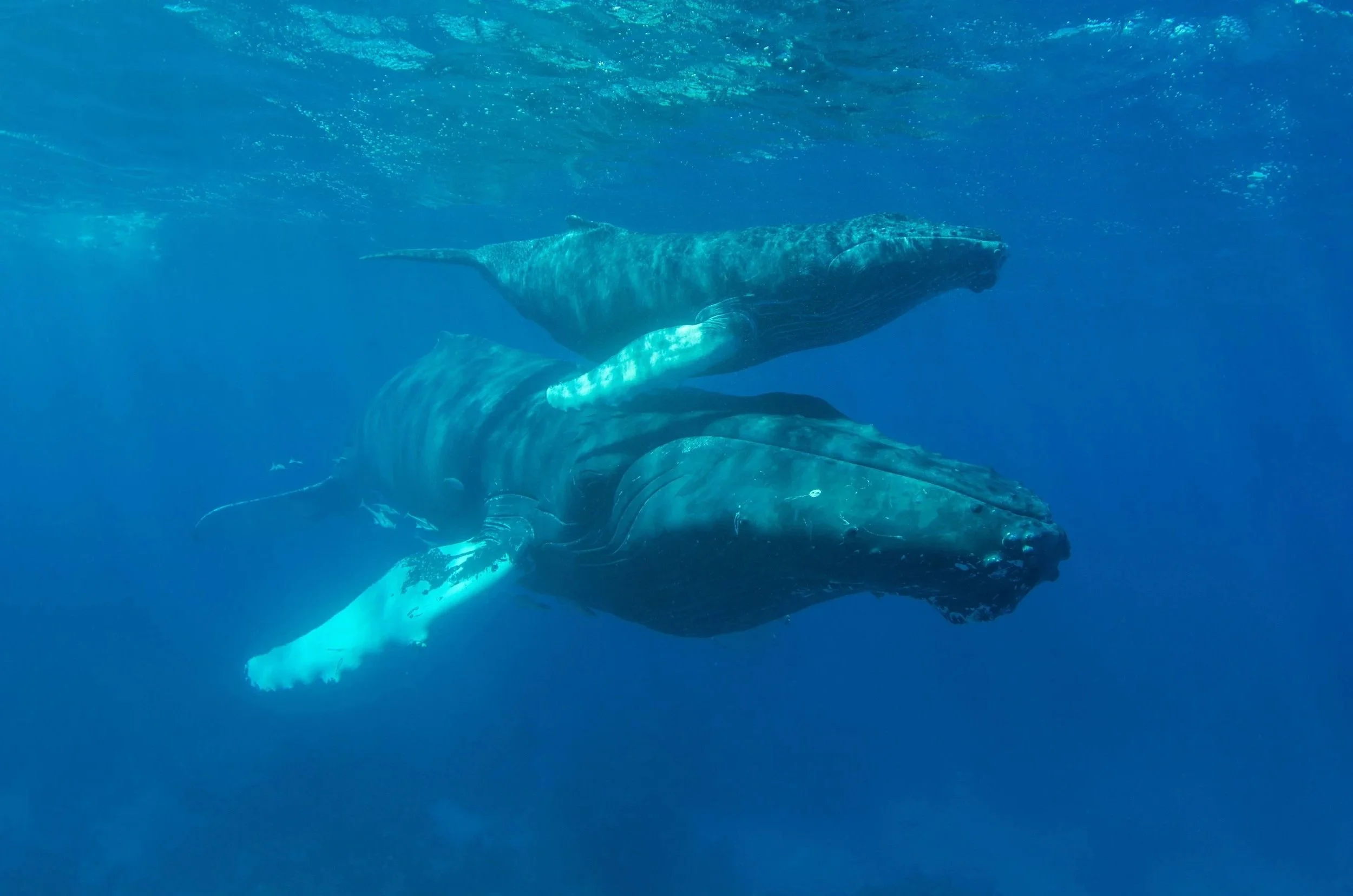
Whale Watchers Wanted: Turn Sightings Into Science
Reporting sightings of whales, dolphins and other marine mammals really make a difference. Download the Anecdata app to easily report your sightings on your phone or, on the website.


Citizen Scientists Needed
Whales in the US Virgin Islands
Little is known about marine mammals in the USVI region. Humpbacks, sperm whales, dolphins and several rarely seen species all use these waters, but very few formal surveys have been done here. Historically, a research vessel would pass through with observers on deck for a couple of weeks, then return more than a decade later for another round of surveys. Eventually even that stopped happening.
Rarely seen species like those in the family Kogiidae are the biggest unknown. Sperm whales live here year round and in greater numbers than most people realize, but they spend nearly all their lives in deep water, so almost nobody sees one. Cuvier’s beaked whales and Gervais' beaked whales have also been confirmed in local waters by acoustic recordings from a UVI research mission this past spring. Most Virgin Islanders have never even heard of these animals, let alone seen one. All three species spend the majority of their time submerged on deep dives, they have small, barely visible blows and, they actively avoid ships. Most of what is known about them comes from strandings rather than live encounters at sea.
Marine mammals are federally protected under the Marine Mammal Protection Act. It required by law that you generally remain at least 300 feet from these animals.
The UVI Ocean Glider Lab
An ocean glider from the UVI Ocean Glider Lab moves through Caribbean water with a hydrophone aboard, recording whatever it hears for months at a time. With no engine and no propeller, it’s much quieter than a research vessel. It is also much less expensive, with no fuel or crew to pay for. And it dives as deep as 1,000 meters and across long stretches of open water, recording with its hydrophone the whole way.
What comes back are audio recordings rich with more information than most people expect. Each whale species has its own characteristic call. When displayed as an image, a spectrogram, those calls are distinct enough that a trained reader can look at a recording and say which animal made it, and when and where. Reading those acoustic pictures and putting names to them is much of what MMES graduate student Keiley Gregory and recent graduate Joshua Soll does.
And it gets even wilder. Sperm whales communicate in short patterned bursts of clicks called codas, and those patterns are learned rather than inherited. Researchers working near Dominica have spent years documenting that sperm whales in the eastern Caribbean use codas that are not shared by sperm whales in other oceans, or even in other parts of the Atlantic. It is the equivalent of a regional dialect. Whales that use different dialects associate with each other and avoid whales that do not, which sorts the population into groups defined by culture rather than geography.
Humpbacks do something different but equally strange. Males in a breeding population all sing the same song at any given time, and that song keeps changing through the season, with new versions spreading from one population to the next across an ocean basin.
None of this tells us what people see at the surface. A hydrophone can pick up a sperm whale clicking in deep water kilometers away and completely miss a pod of dolphins that a ferry full of people watched go by. That is where citizen scientists come in.
anecdata.org
Report Whale and Dolphin Sightings
The lab has created a free public database called Marine Mammal ID for the Virgin Islands and Puerto Rico. It runs on Anecdata, an open citizen science platform. Anyone can use it, and anyone can look at the results.
Online: Go to anecdata.org and search for Marine Mammal ID for the Virgin Islands and Puerto Rico.
On your phone: Download the free Anecdata app from the App Store or Google Play, then find the project inside the app.
You can log a sighting while it is happening or enter it later. The form asks for location, date and time, species (if you happen to know it), weather and water conditions, whether you saw adults, calves, or both, a photo, if you have one and any other details you may have noticed.
A photo helps researchers confirm the species, so it is worth taking one if you safely can. But a report without a photo is still a useful report. Please submit it either way.
The single most valuable thing you can give us is an accurate location and time.
What Counts
Whales, dolphins, and any other marine mammal you spot in local waters. A spout in the distance counts. A pod of dolphins off the bow counts. If you are not sure what you saw, log it anyway and describe what you observed.
What happens to your reports
Reports go into a public database that researchers can compare against the acoustic data collected by the gliders. If a glider recorded a sperm whale on a given day and someone logged a sighting nearby, that is a much stronger piece of evidence than either record on its own.
The full dataset is free to download! Students, teachers, boat captains, and anyone else with a question can pull it and use it. The marine mammal work is supported by NOAA Fisheries, which is responsible for tracking these populations.
Some of the species you might see
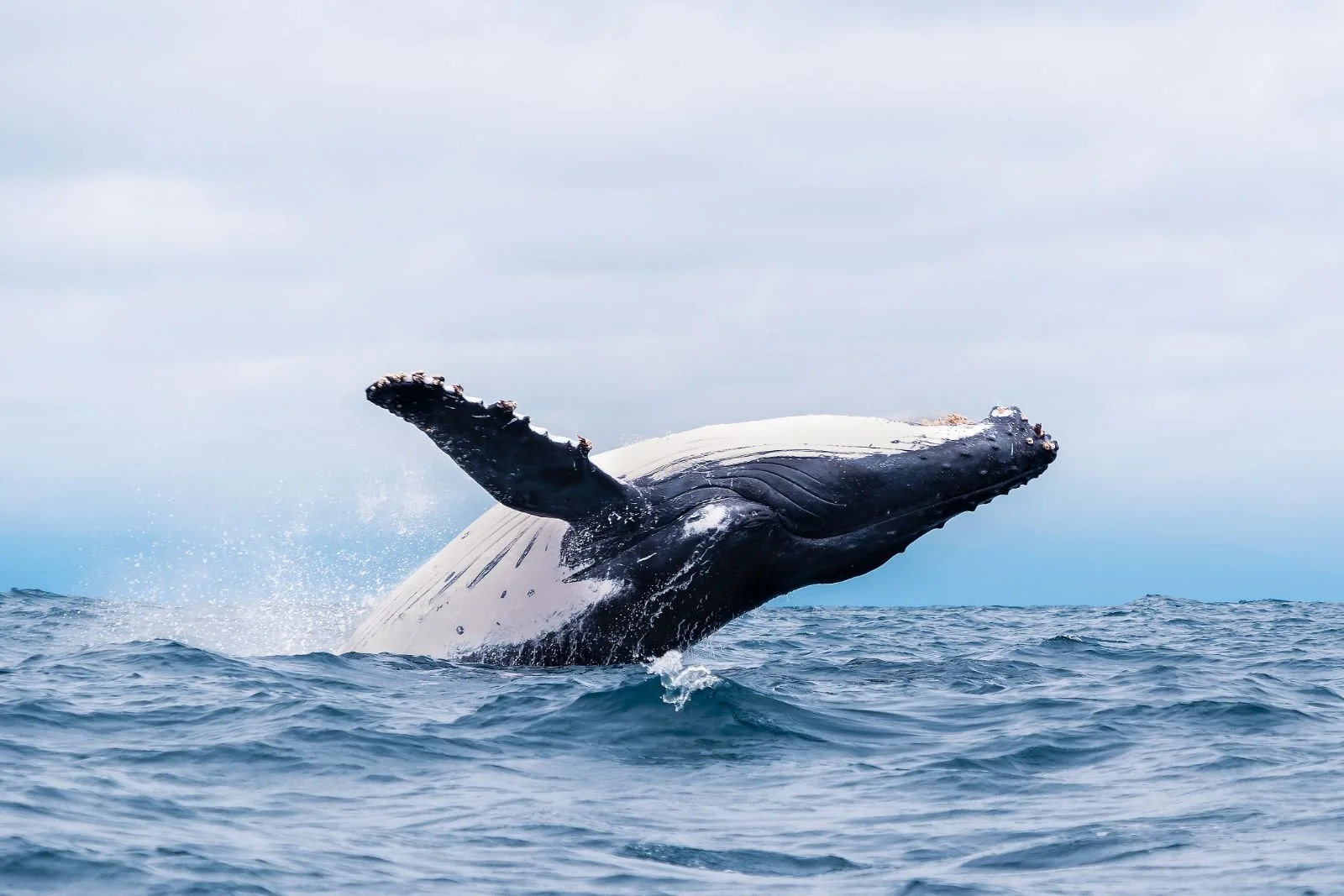
HUMPBACK WHALES visit the Territory from roughly December through April. They are the species most people recognize, and the most commonly reported.
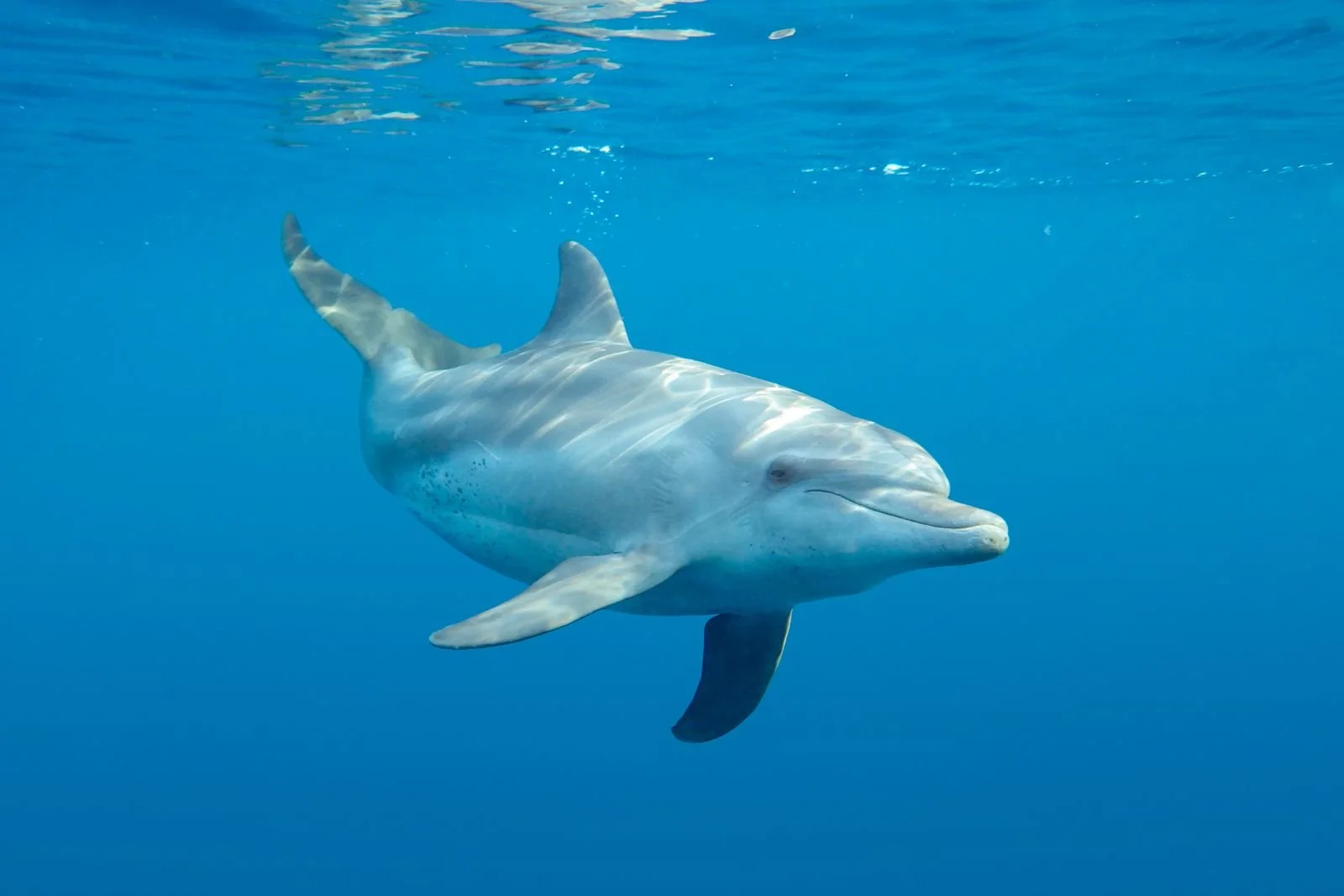
Dolphins are seen regularly across the territory.
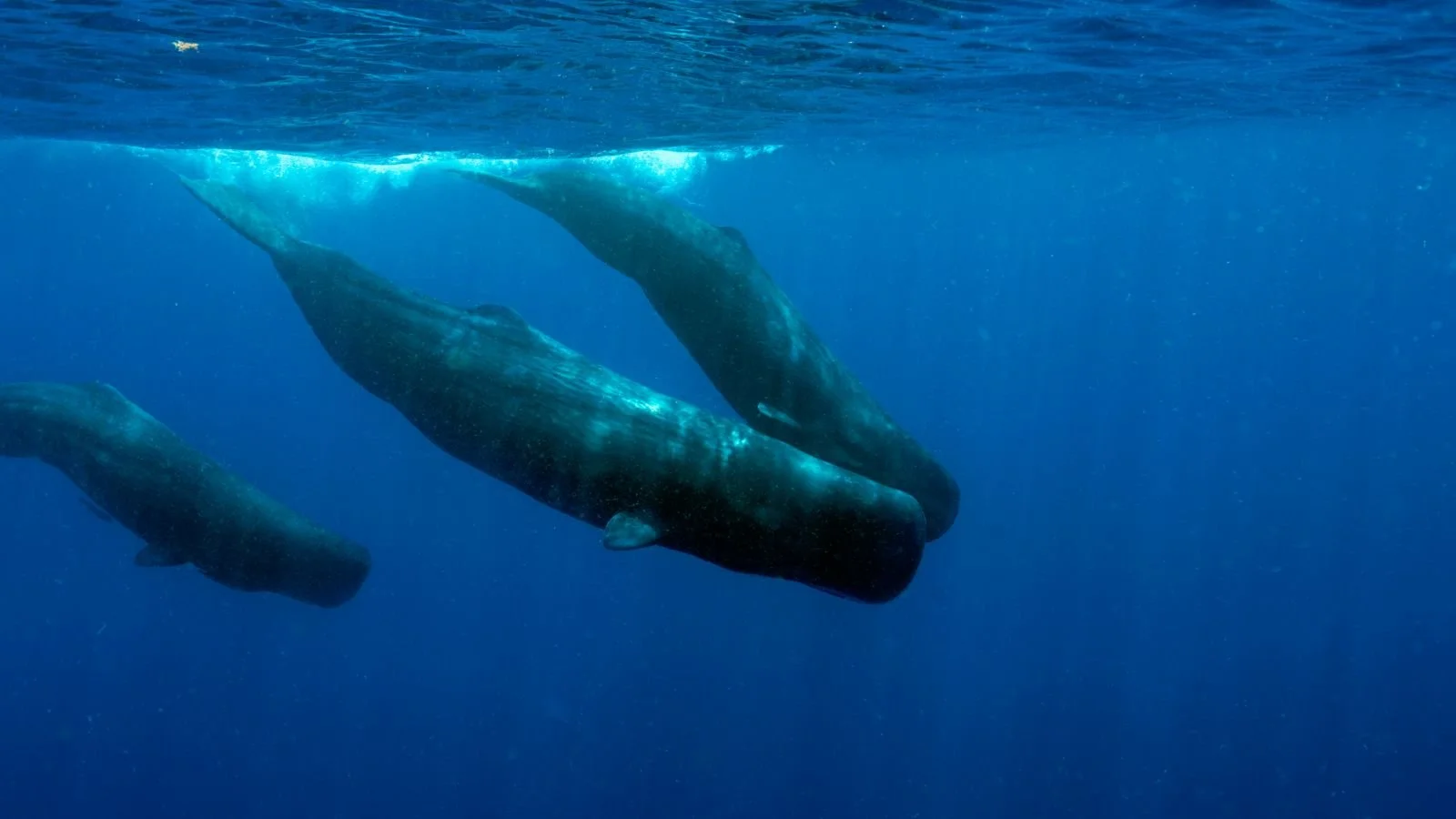
SPERM WHALES are present year round and are more numerous than most people realize. They spend most of their lives in deep water, so sightings are uncommon. They are also listed as endangered, which makes every confirmed sighting valuable.
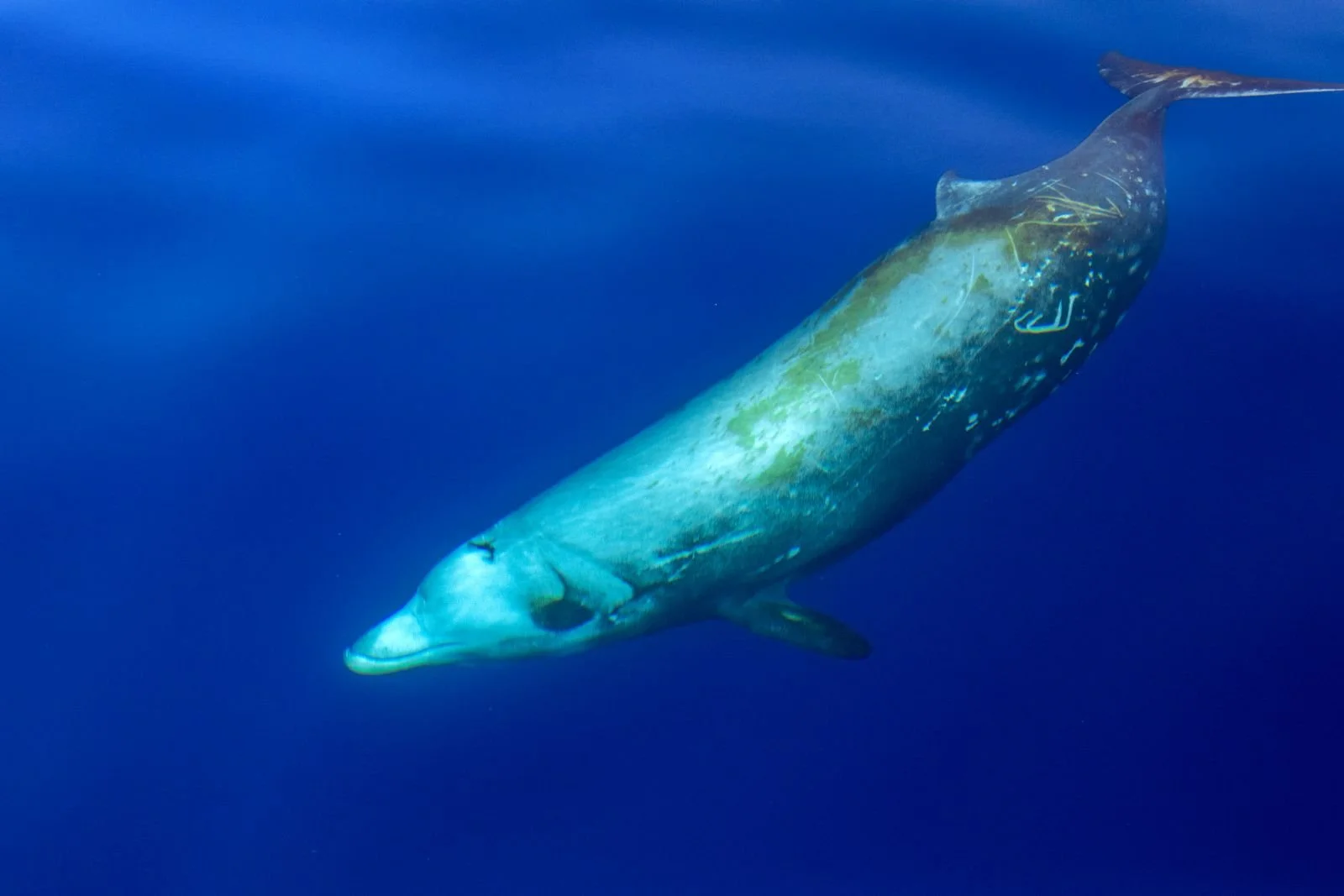
Beaked whales and Kogia are here as well, though they are smaller, harder to spot, and almost never reported. If you see something out there you cannot identify, that is exactly the kind of sighting worth logging. Seen above is a goose-beaked whale.
For captains and crews
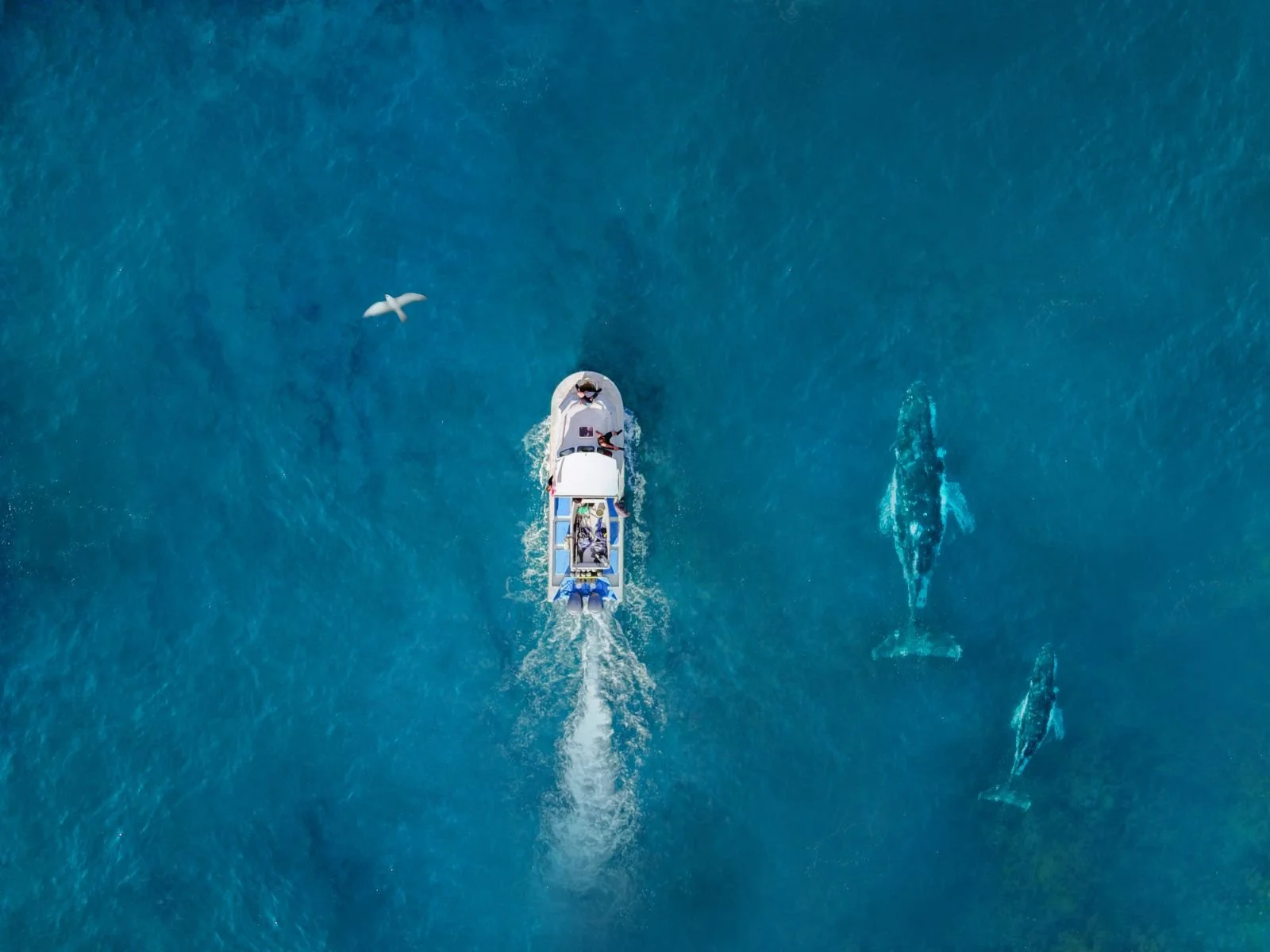
If you run charters, dive boats, ferries, or fishing trips, you are on the water more than almost anyone. Your sightings are some of the most useful data we can get.
The Glider Lab has marine mammal identification stickers with a QR code that takes you straight to the reporting form. For stickers or printed brochures for your vessel, get in touch.
Questions
Contact the UVI Ocean Glider Lab through uvigliders.org.
Reporting
Report sightings, visit anecdata.org.